Upgrading IPTV in a Large Operating Hotel: Planning a Phased Migration
November 18, 2026
Research period: October 2026
By COTT.TV Hospitality Technology Research Desk·Published November 18, 2026·8 min read

Quick Summary
Inventory the exact television, firmware and network combinations before choosing pilot rooms. Keep the existing service available until each combination passes agreed checks. Move in small, gated waves; assign authority to pause or reverse them; and require reception, enginee…
An IPTV upgrade in an operating hotel is a service change, not simply a television installation. A room may be ready for an arrival while its proposed configuration remains untested; another may share a network change with rooms scheduled for a later wave. The plan needs to protect the existing service, identify precisely what has been proved and give staff a workable way to stop or reverse a change.
Build a room-level map before booking change windows
Create a register linking each room to its television model, firmware, connection type, network segment, current service and intended change. Add the source of the room-to-device mapping and the person responsible for confirming it. Record access constraints separately: a technically suitable room is not necessarily available for work before its next arrival.
Group rooms into profiles that can actually be tested. A profile might pair an exact model and firmware with a network path, channel configuration and room-mapping method. Do not infer that adjoining rooms share a profile. Mark missing firmware, uncertain cabling and unidentified devices as unknown; an unknown is a task for discovery, not a reason to extend a pilot result.
The manufacturer pages for the LG 55UK762H, Europe/CIS variant and Philips 43HFL5114/12 MediaSuite identify specific products. They do not establish that either will run a proposed IPTV configuration on the firmware, network and settings installed at a particular hotel. Check the exact estate and proposed workflow rather than treating a model family or a manufacturer page as fleet approval.
The register should be readable by operations as well as IT. It should show which rooms retain the old service, which are in a pilot, which have been changed and which are held from guest use. That status must be reconciled with the hotel's room-assignment process; a technical spreadsheet alone cannot prevent a room from being assigned.
Make the pilot answer defined questions
Choose pilot rooms to cover material differences, not merely convenient vacancies. Before work starts, agree what each profile must demonstrate and who will observe it. Checks should include startup and restart, the permitted channel lineup, device and room identity, remote-control operation, and the guest-facing behaviour actually proposed. Check what remains on screen after checkout or a guest change. If casting is proposed, test the specified devices and pairing workflow; do not assume support across other models or automatic disconnection.
Keep evidence tied to the tested profile: room, model, firmware, network path, configuration version, test conditions, result and reviewer. Where a check fails, record the fault and choose a disposition. The team may correct and retest, exclude that profile from the next wave or hold the wider change while it investigates. A demonstration that works once in one room does not answer how the service behaves after a restart or on another path.
COTT.TV supports individual hotels, large properties and groups, with compatible TV and managed-device deployment paths. Use the hotel TV overview to start the equipment discussion and define the exact models, software profiles and room-service workflows in the rollout plan. The pilot then gives engineering, operations and central IT a shared acceptance record.
Treat old and new service as a planned mixed state
During a phased migration, reception and engineering may have to support both configurations. Specify how they can identify the active service in a room, who can change it and which team owns a fault that crosses the two paths. Keep a versioned copy of the prior configuration and a restoration procedure appropriate to the site's architecture. Preserving service need not mean leaving two systems physically connected to every television; it does mean having a restoration route that has been rehearsed before it is needed.
Review channel rights and distribution arrangements before reproducing a lineup. Document the relevant Domain Name System settings, endpoints, access rules and device identities for each service. A shared network change could reach rooms outside the current wave, so central IT should know its scope and reversal method before authorizing it. Room mapping deserves its own check: a working picture does not establish that the television has the correct identity or guest-facing state.
Define how the proposed service handles guest state, how a checkout reset is performed and verified, and what must be retained under the hotel's customer-data and legal requirements. Restoration must not reveal a previous guest's state or discard records that must be kept. If the team cannot establish the reset and restoration behaviour for a profile, that profile is not ready for guest use.
Give each wave an entry gate and a hold point
Name a migration lead to maintain the register and plan. Engineering should own in-room checks; central IT should control shared network changes and investigate cross-room faults. An operations lead should coordinate access, arrivals and room release with reception and housekeeping. Identify the person who authorizes a wave and make it clear that any of these teams can call an immediate hold when guest service, data or rights may be affected.
Entry to a wave should require a complete inventory for its rooms, passing pilot evidence for every included profile, an agreed restoration route, room-access approval and a current list of shared changes. At the hold point, review failed checks and exceptions before adding rooms. At exit, reconcile the installed configuration with the register and room status, document contained defects, and obtain operations approval for release. Observe the service through relevant arrivals, departures and power cycles before approving the next wave. Finished installation is not the same as stable operation.
For a hotel group, central IT can maintain common controls and change records, while each property approves its own room access, device variants and network paths. The COTT help route can be included in the incident-contact plan, but the hotel's own escalation, room-assignment and guest-response responsibilities still need named owners.
Put stop and restoration choices in writing
The following is an editorial decision template, not a claim of automatic recovery or a universal set of thresholds. Before the change window, the hotel should set its own criteria for removing a room from inventory, reversing a shared change and authorizing restart.
| Condition found during a wave | Immediate response | Evidence before release or restart |
|---|---|---|
| A room fails a check without signs of a shared fault | Hold that room and further rooms with the same profile; restore its prior service if needed | Engineering records the fault, restoration and retest; operations confirms room availability |
| Similar faults appear across rooms after a shared change | Stop the wave and assess reversal of that change | Central IT identifies affected paths and versions; the decision owner authorizes restart |
| Room identity, guest state or permitted channels are incorrect | Prevent affected rooms from entering guest use and follow data or rights procedures | Operations and IT confirm containment, correction and an independent recheck |
| The available repair window closes before an arrival | Stop adding rooms to meet a rollout target | Operations confirms the assignable-room list; the migration lead reschedules work |
NIST SP 800-34 Rev. 1 provides general contingency-planning guidance relevant to assigning responsibilities, documenting recovery and exercising a plan. It does not certify this hotel design or prescribe these room-level decisions.
Rehearse a fault before relying on rollback
Consider a hypothetical rehearsal, not a completed deployment or a COTT.TV test. A pilot television starts on the proposed service but shows an incorrect channel lineup after a restart. Engineering holds the room from guest assignment and captures its device identity, profile and current configuration. Central IT checks whether the fault follows a shared setting; operations checks the arrival schedule and available rooms. The team then follows its documented restoration procedure and repeats the startup, channel, identity and guest-state checks.
The rehearsal should answer more than whether a picture returns. Can staff find the correct prior configuration? Who authorizes reversal if other rooms share the change? Is the room safe to assign after restoration? What evidence would justify resuming the wave? If the cause remains uncertain, leave the affected profile on hold. If a correction is made, retest that profile before approving expansion. No disruption-free outcome is assumed.
Close with evidence each team can use
Reception needs an accurate assignable-room list and a simple way to report a television fault by room and symptom. Engineering needs device details, the installed configuration and restoration steps. Central IT needs the change record and enough network context to connect faults across rooms. Ask each team to sign off on the checks it can actually perform rather than relying on a single installation-complete label.
At the end of a wave, reconcile room status, configuration versions and open defects. Decide explicitly whether to expand, continue observing or reverse part of the change. That decision tells an owner more than a count of altered televisions: it separates work completed from guest service verified.
Practical questions
Does a successful pilot approve every floor and TV?
No. Approval applies to the configurations actually tested. Identify different device, firmware and network profiles before adding them to a deployment wave.
When should a wave stop?
Use the agreed hold criteria, including incorrect room identity, guest-state handling or repeated service failures. Record the reason and resolve it before continuing.
Sources and methodology
Evidence was reviewed on 23 October 2026. The manufacturer pages identify the named models and, for the cited LG page, its Europe/CIS scope; they are not evidence of compatibility with a hotel's installed firmware or network. NIST's general contingency guidance informs the recovery-planning recommendations, not a hotel-specific certification or measured result. The wave gates, decision table and failure rehearsal are editorial planning recommendations and an explicitly hypothetical exercise. No customer deployment, physical test, service guarantee or measured saving is claimed.
Cover photograph: imgix / Unsplash.
Related Posts
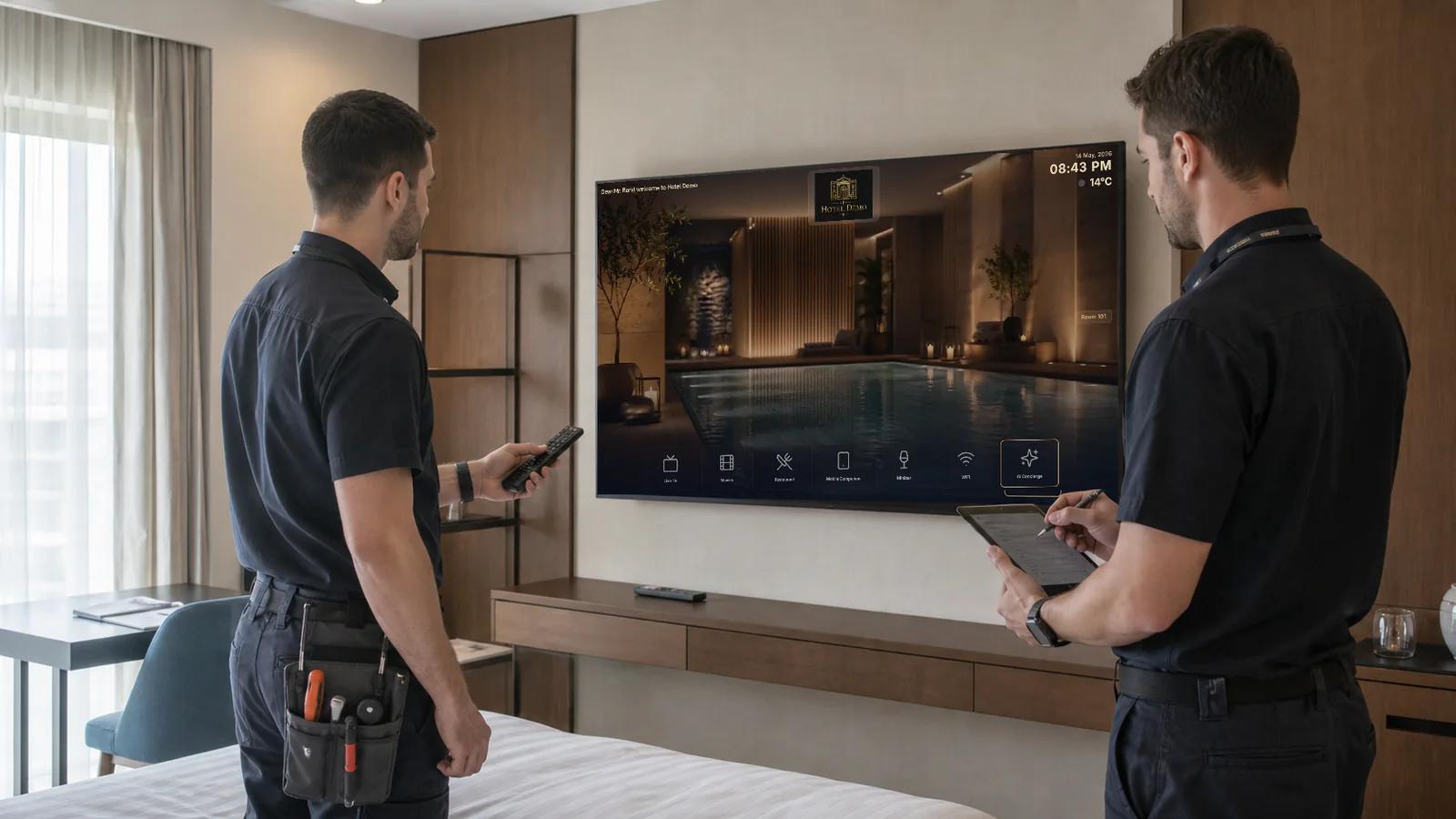
How to Audit 100 Guest-Room TVs in One Morning
2026-08-20
A repeatable room sampling, device identification and acceptance workflow that produces actionable evidence without disrupting the property.
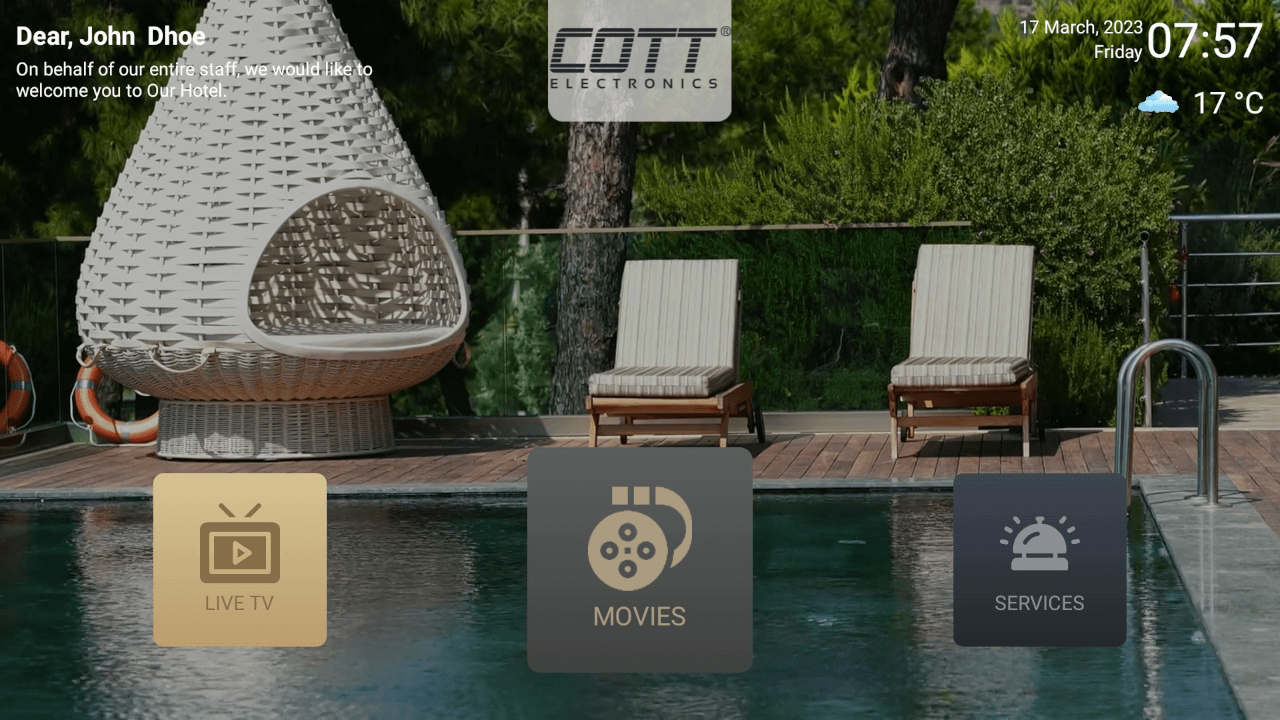
How to Upgrade Your Hotel from Cable TV to IPTV: Step-by-Step Guide
2026-04-08
Complete migration guide for hotels switching from cable or satellite TV to cloud IPTV. Step-by-step process, cost analysis, timeline, and common pitfalls to avoid.
PMS, Channel Manager and Booking Engine: What Each Does and How They Work Together
2026-11-16
Trace a reservation from sale to room assignment, understand why inventory can differ from bookable availability, and test the changes and failures that matter before choosing a hotel technology stack.