Housekeeping and Maintenance Requests
September 1, 2026
Research period: June 2026
By COTT.TV Hospitality Technology Research Desk·Published September 1, 2026·2 min read

Quick Summary
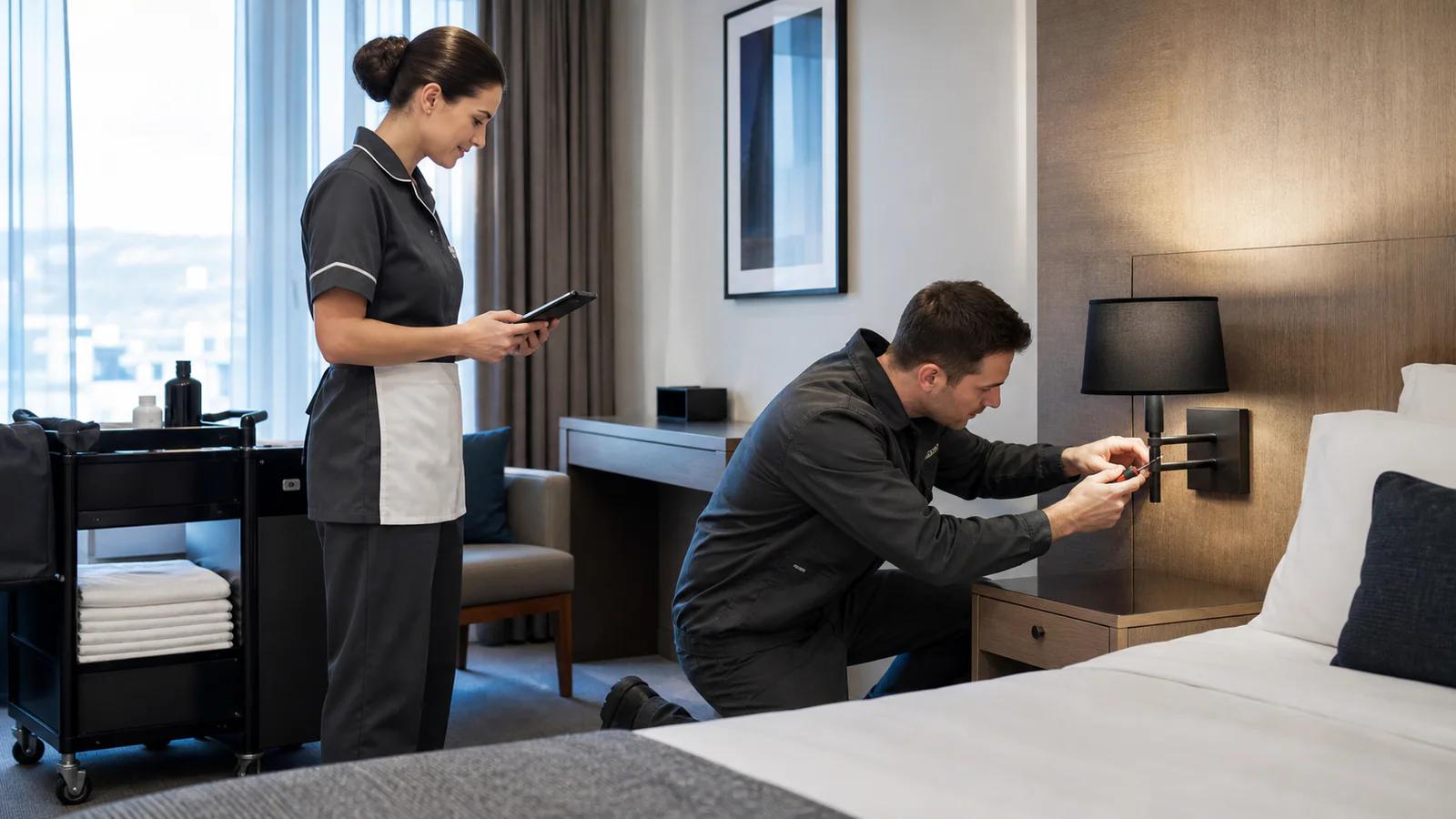
Every request needs a category, property and room, priority, owner, acceptance deadline, escalation, completion evidence and guest-facing closure.
A digital request is useful only if someone accepts it, completes it and closes the loop with the guest or duty team. Replacing a telephone call with an unowned notification simply hides the same operational failure behind a screen.
Define the task state
Use a simple state model: new, accepted, in progress, blocked, completed and verified. Record who changed the state and when. A request should never move directly from new to invisible.
Route by capability and shift
Extra towels belong to housekeeping; a loss of power belongs to engineering; a safety concern belongs to the duty manager. Routing rules must account for property, time, language and staff availability. If nobody accepts within the service target, escalate automatically.
HOTREC reports that European hospitality is still missing around 10% of its workforce. Technology cannot create staff, but it can reduce repeated calls, make priorities visible and prevent two people from unknowingly handling the same task.
Keep the form short
Guest-facing requests should start with clear choices and optional notes. Staff forms may add photo, asset, room status and parts. Do not require ten fields to request a towel.
Measure the service, not the screen
Track time to accept, time to complete, reopen rate, escalation rate and repeated issue by room or asset. A fast closure with high reopen rate may signal superficial work. Compare priority classes separately.
Connect front and back of house
The room TV or QR page can create a task. The staff mobile application should show the queue, allow acceptance and record completion. Reception needs visibility without becoming the manual dispatcher for every department.
Build safe boundaries
Sensitive categories require controlled visibility. Staff should see only the properties and tasks relevant to their role. Photos and notes may contain personal data and need retention rules. Shared personal messaging accounts are not a task system.
COTT.TV roadmap
COTT.TV already connects guest-facing services to property administration. Dedicated housekeeping and technical staff applications extend the same room, property and service model into closed-loop operations, with the objective of including these workflows in the platform rather than selling disconnected modules.
Sources and further reading
Related Posts
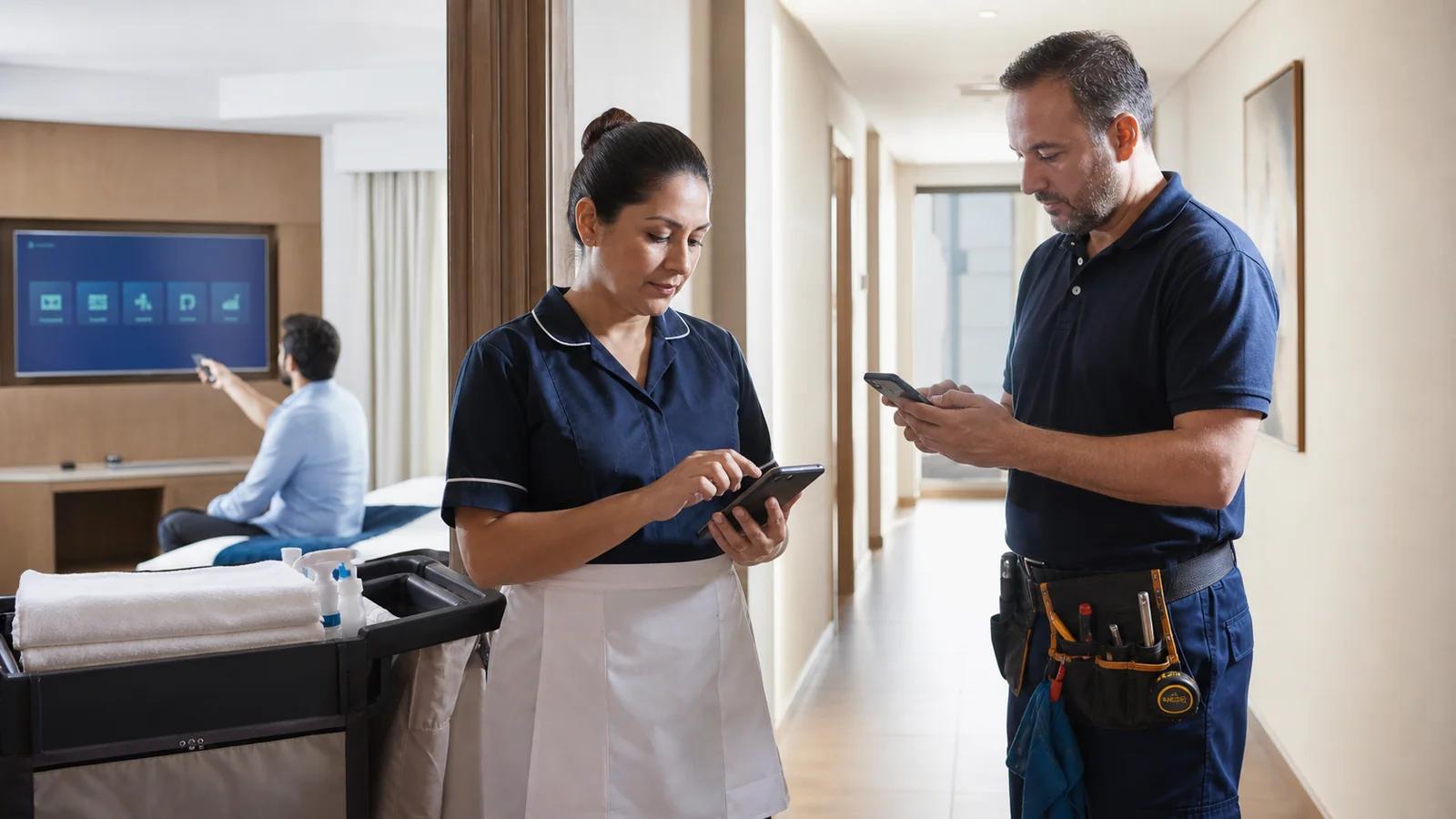
Hotel Workforce Automation: Use the Room TV to Reduce Service Friction
2026-08-17
European hotels face structural labour shortages. The right automation does not replace hospitality; it removes avoidable calls, routes guest requests and gives housekeeping and maintenance a clear work queue.
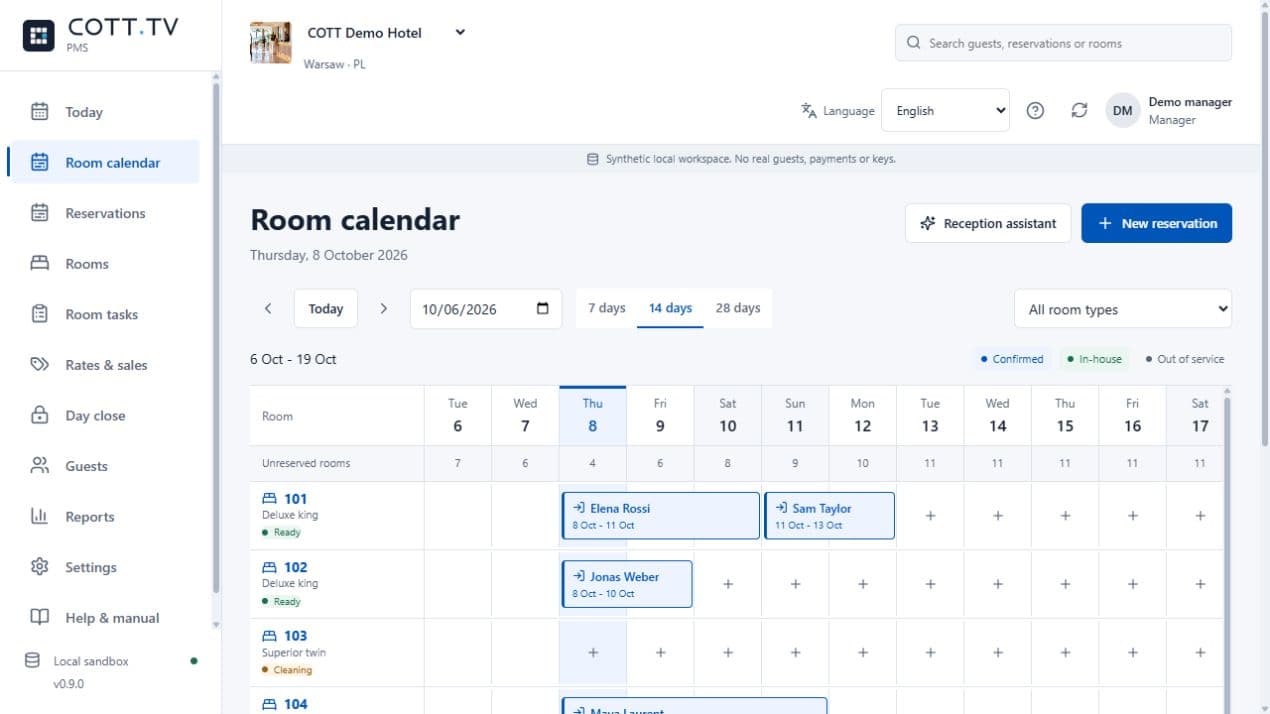
Introducing COTT DESK: Hotel PMS, Built Around the Hotel Day
2026-10-15
COTT DESK brings reservations, reception, housekeeping and guest accounts together. Applications open for a selected 90-day Founding Hotels pilot.
Hotel PMS Events for TV Systems: Check-In, Room Move and Checkout Done Properly
2026-10-02
An event-driven integration pattern with idempotency, reconciliation, privacy controls and failure recovery for hotel room technology.