24/7 Hotel Technology Support: What an SLA Should Cover
November 22, 2026
Research period: October 2026
By COTT.TV Hospitality Technology Research Desk·Published November 22, 2026·9 min read

Quick Summary
Ask suppliers to define separate clocks for acknowledgment, qualified response, workaround, restoration and final resolution. Tie priorities to guest impact, document ownership across suppliers, and rehearse an incident before accepting an SLA. An always-open contact channel i…
A night manager reports that several guest-room televisions cannot load a service. The support portal accepts the report, but the manager still needs to know who will assess it, when the hotel will hear back and which team can act if the cause lies outside the application. Those questions belong in a service-level agreement (SLA), not in an improvised conversation during an outage.
Define what happens after a report arrives
Hotels need a reporting route that works when the relevant on-site specialist is unavailable. But “24/7 support” can describe different services: the ability to submit a ticket, a monitored queue, a person who acknowledges it, or a technician authorised to investigate immediately. An SLA should state which activities are covered, through which channels, and whether arrangements differ on weekends or public holidays.
Ask what happens if the normal portal is unavailable. Is there an urgent telephone route? Will a call create a ticket that both parties can follow? Identify who is permitted to report an incident and who can approve access or changes. At a group, central technology staff and property duty managers may need different roles; neither should assume the other has received an update.
Support scope matters as much as opening hours. List the properties, services, devices and environments covered by the proposed agreement. Identify work that requires an on-site visit, replacement equipment or another supplier, rather than treating an always-open contact channel as a promise that every fault can be repaired remotely overnight. The COTT.TV help page provides a route for product-support enquiries; it does not establish a particular support entitlement. Check the applicable agreement for commitments to a property or group.
Give the night team a usable severity guide
Severity should reflect the service impact the hotel can observe. Priority describes the order and urgency of handling. The terms may be linked, but the contract should explain how: a fault confined to one device may be routine in one situation and urgent in another if it affects an essential guest need.
The following is an editorial negotiation template, not a COTT.TV service schedule or a set of promised response times:
| Proposed class | Impact to establish | Handling to agree |
|---|---|---|
| Critical incident | A contracted service is unavailable across a property or agreed group-wide scope, with no usable workaround | Urgent contact route, qualified escalation, update cadence and restoration approach |
| High-impact incident | A cluster of rooms or a shared function is affected, with only a limited workaround | Triage route, evidence required, technical owner and next update |
| Standard incident | An isolated fault has no identified wider impact | Reporting route, support-window treatment and repair or replacement process, where applicable |
| Planned request | A change or investigation is needed without an active service interruption | Approval, scheduling and communication rather than an incident-restoration target |
Make thresholds specific to the operation. “Multiple rooms” may cover very different guest impact at different properties. Define when an incident is assessed at property level and when shared infrastructure makes group-wide scope relevant. State who can assign or revise severity, how the hotel can challenge a classification, and what happens when new evidence shows the impact has expanded. Staff should be able to report symptoms without having to prove a technical cause first.
Use separate clocks for separate outcomes
An acknowledgment says a report was received and provides a reference. A qualified response begins assessment by someone with the appropriate skills and access. A workaround offers a usable alternative, possibly with limitations. Restoration returns the affected service to an agreed operational state. Resolution addresses the underlying fault and any remaining corrective work. A ticket can therefore contain a restored service and an unresolved root cause at the same time.
For each proposed target, specify the starting event, applicable time zone, operating hours and method of recording progress. Does the clock begin when staff notice a fault, submit a report or reach the designated urgent channel? Who can pause a clock while awaiting site access, hotel evidence or a third party, and how will the hotel be told? An automated acknowledgment should not be counted as a qualified technical response unless the agreement expressly defines it that way.
Set expectations for communication independently of repair targets. An update can say what has been checked, what remains uncertain, who is acting next and when the next update is due. It need not invent a restoration estimate. If a proposal includes service credits, restoration targets or exclusions, compare their precise contractual scope rather than assuming they follow from a “24/7” label. Confirm the selected support tier and its service scope in the applicable agreement.
Make supplier boundaries actionable
A guest-visible failure can involve the hotel’s local area network, internet service provider, room device, application or content source. The parties’ actual responsibilities depend on their contracts and access. An SLA should identify what its supplier can inspect and change, what evidence it can provide when the fault appears to be elsewhere, and who receives that evidence.
Prepare an incident record that can move between teams. Useful fields include the property and affected room or device identifiers, first-observed time, symptoms, extent of impact, recent approved changes, relevant error messages, checks already performed and an authorised hotel contact. Record only guest information needed for the investigation; names and viewing habits should not be collected by default. Agree how logs are obtained and shared securely.
Turn boundaries into handoff instructions. If devices cannot reach a network service, who engages the hotel’s network team? If the connection itself appears affected, who contacts the internet provider? If teams investigate in parallel, who maintains the common timeline and supplies reception with an agreed status? A supplier may reasonably exclude repair of infrastructure it does not control. A fair handoff still identifies the finding, the next owner and what the hotel should do if the diagnosis is disputed. Avoid a process in which each supplier closes its own ticket while the guest-facing problem remains open.
Plan maintenance and incident communication
Planned work needs a different route from an unplanned interruption. Ask for notice arrangements, an agreed maintenance window, expected guest-visible effects, an approver and a rollback decision-maker. Define how the team will report an unexpected fault or work that exceeds the window. Where central teams serve several properties, specify which hotels receive notice and who can authorise a change affecting shared services.
During an incident, reception needs a concise status it can use without turning a tentative diagnosis into a repair promise. Agree who supplies that status, who approves guest-facing wording and how staff can correct an inaccurate impact estimate. For a material outage, request a short review of detection, technical findings, handoffs and corrective actions. Assign owners and follow-up dates to actions; the review should improve preparedness, not presume blame.
NIST SP 800-34 Rev. 1 offers general contingency-planning context for preparedness and recovery. It is not a hotel-specific SLA, a supplier certification or evidence that a proposed support arrangement will achieve particular results.
Test the agreement against an overnight incident
Before accepting a proposal, run a tabletop exercise with the people who would use it. In an explicitly hypothetical scenario, staff find that televisions in a cluster of rooms cannot load the guest interface while other rooms appear unaffected. Provide the participants with the draft SLA, reporting channels and the identifiers the hotel would normally have available.
Have the duty manager classify the impact and contact support. Check whether the agreement makes clear what constitutes acknowledgment, when a qualified responder becomes involved and when reception should expect an update. Then introduce evidence that the affected rooms share a network segment. Ask which team may verify that finding, who contacts the network owner and whether the original supplier remains involved in coordinating its part of the investigation.
Finally, assume a temporary change returns a usable guest service. The parties should be able to say whether that is a workaround or restoration, who approves a permanent change and what remains open before final resolution. This exercise tests whether responsibilities and definitions are understandable. It does not measure a supplier’s actual performance or predict an outage outcome. Rewrite clauses that require participants to invent a contact, authority or handoff.
Compare offers against the same checklist
Evaluate proposals using the same incident classes and property scope. For each offer, establish:
- 1Which reporting channels are open outside normal business hours, and who monitors them.
- 2Whether acknowledgment, qualified triage, updates, workaround, restoration and resolution have distinct definitions.
- 3Which services and properties are covered, including shared services used by a group.
- 4How on-site attendance, replacement equipment, planned maintenance and third-party dependencies are treated.
- 5Who owns the incident record, cross-supplier escalation and communication to the hotel.
- 6What evidence, acceptance checks and closure approval are required.
Resolve unclear ownership before bargaining for a shorter target that nobody can reliably fulfil. Then compare commitments and exclusions against the hotel’s staffing and operational needs. The COTT.TV pricing page is a starting point for a product enquiry, not a substitute for the current applicable service description and commercial terms.
Practical questions
Does 24/7 describe a restoration deadline?
Not on its own. Contact availability, qualified response, workaround and restoration are separate commitments that should be defined in the agreement.
What makes an SLA operationally useful?
Clear scope, guest-impact severity, named ownership, escalation, update expectations and a way to verify that the guest service has been restored.
Sources and methodology
Evidence was reviewed 23 October 2026. The supplied external source is NIST SP 800-34 Rev. 1: contingency planning. Its relevance here is general preparedness and recovery planning; it does not supply hotel incident thresholds, response times, contractual terms or measured supplier performance. The glossary, severity template, checklist and hypothetical exercise are editorial recommendations, not research findings, customer results or COTT.TV commitments. Confirm coverage, targets, exclusions and prices in the agreement offered to the property or group.
Cover photograph: imgix / Unsplash.
Related Posts

EU Tourism Demand in H1 2026: What Hotels Can—and Cannot—Learn
2026-10-25
EU tourist-accommodation guest nights rose in the first half of 2026, but national changes are not hotel forecasts. Here is how to use the data alongside property records to make better service and distribution decisions.
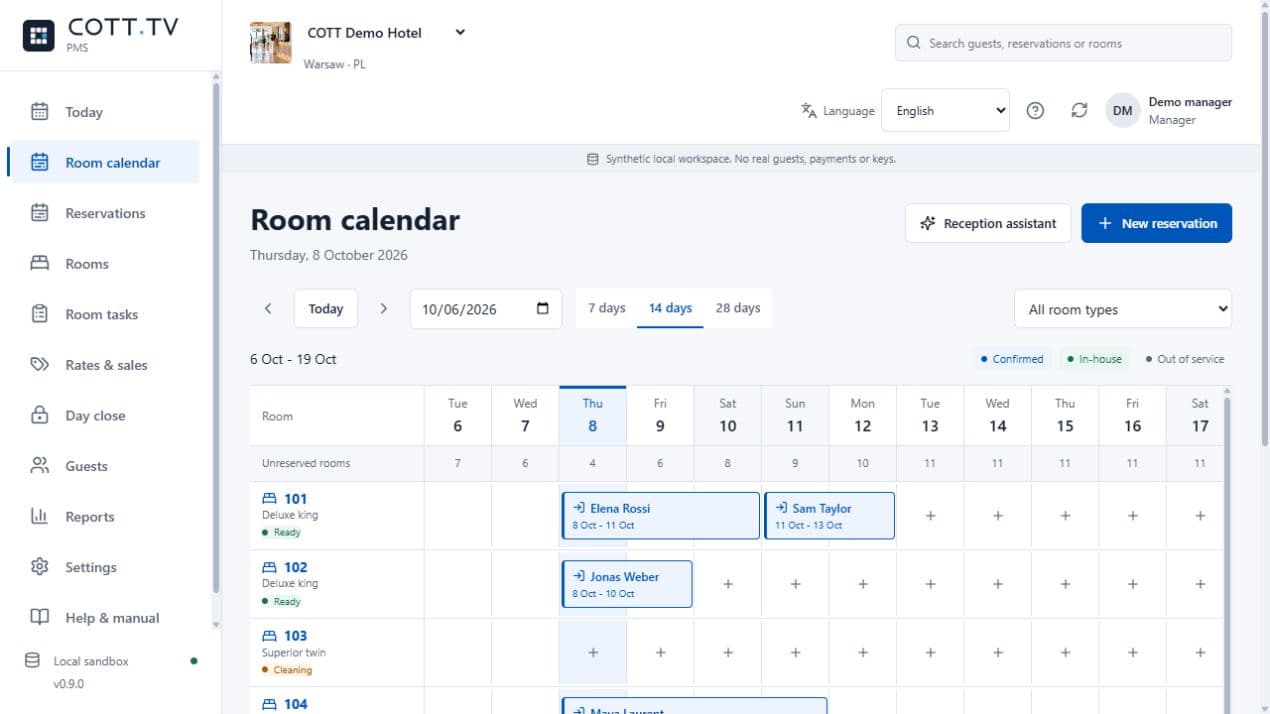
Introducing COTT DESK: Hotel PMS, Built Around the Hotel Day
2026-10-15
COTT DESK brings reservations, reception, housekeeping and guest accounts together. Applications open for a selected 90-day Founding Hotels pilot.
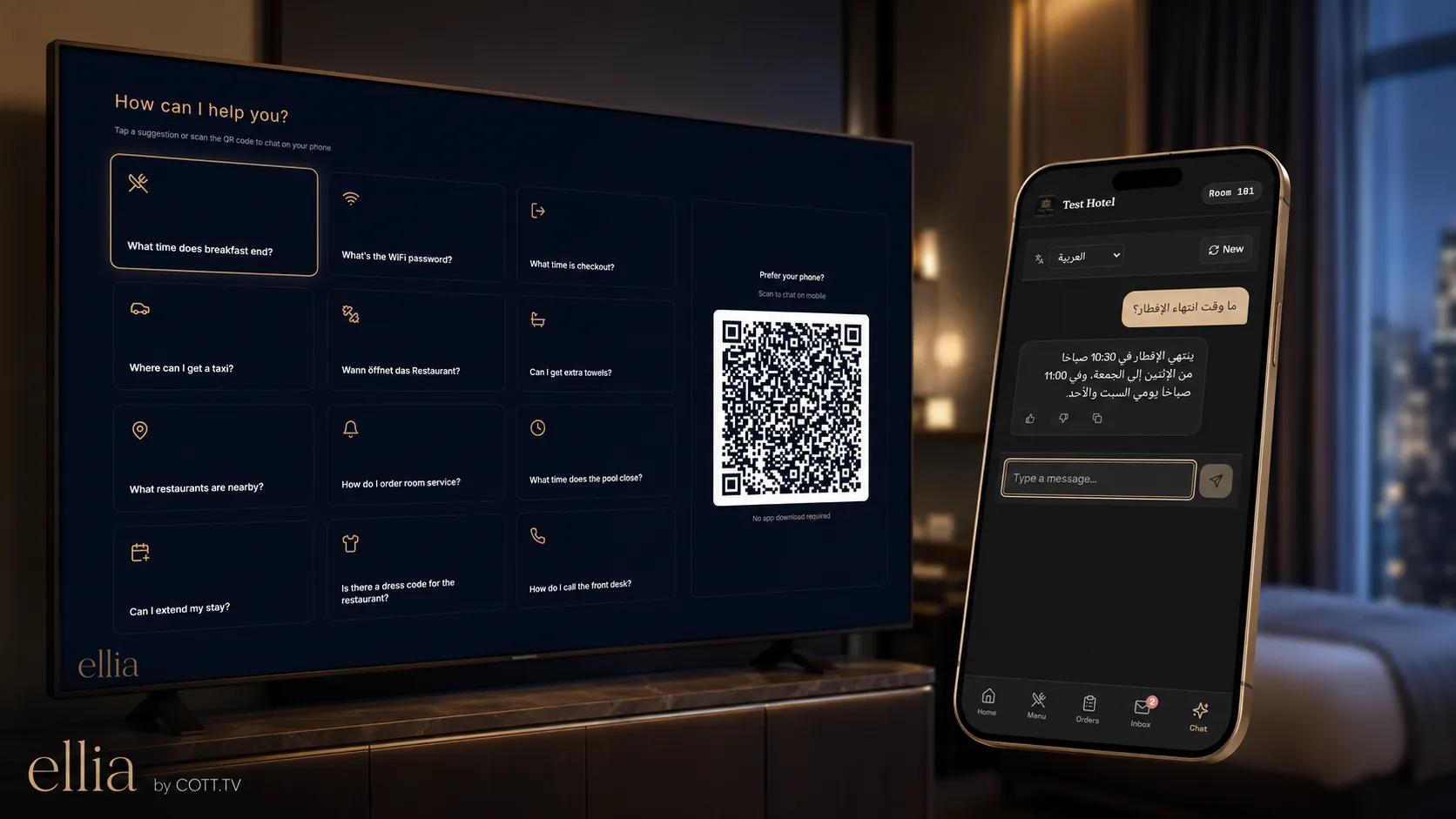
Beyond Chatbots: How Ellia AI Serves Hotel Guests in 35 Languages
2026-05-14
How Ellia, COTT.TV's AI concierge, serves hotel guests in 35 languages across 200+ European properties, and what production data reveals about front desk economics.