Digital Guest Service KPIs: What Hotels Should Actually Measure
September 5, 2026
Research period: June 2026
By COTT.TV Hospitality Technology Research Desk·Published September 5, 2026·2 min read

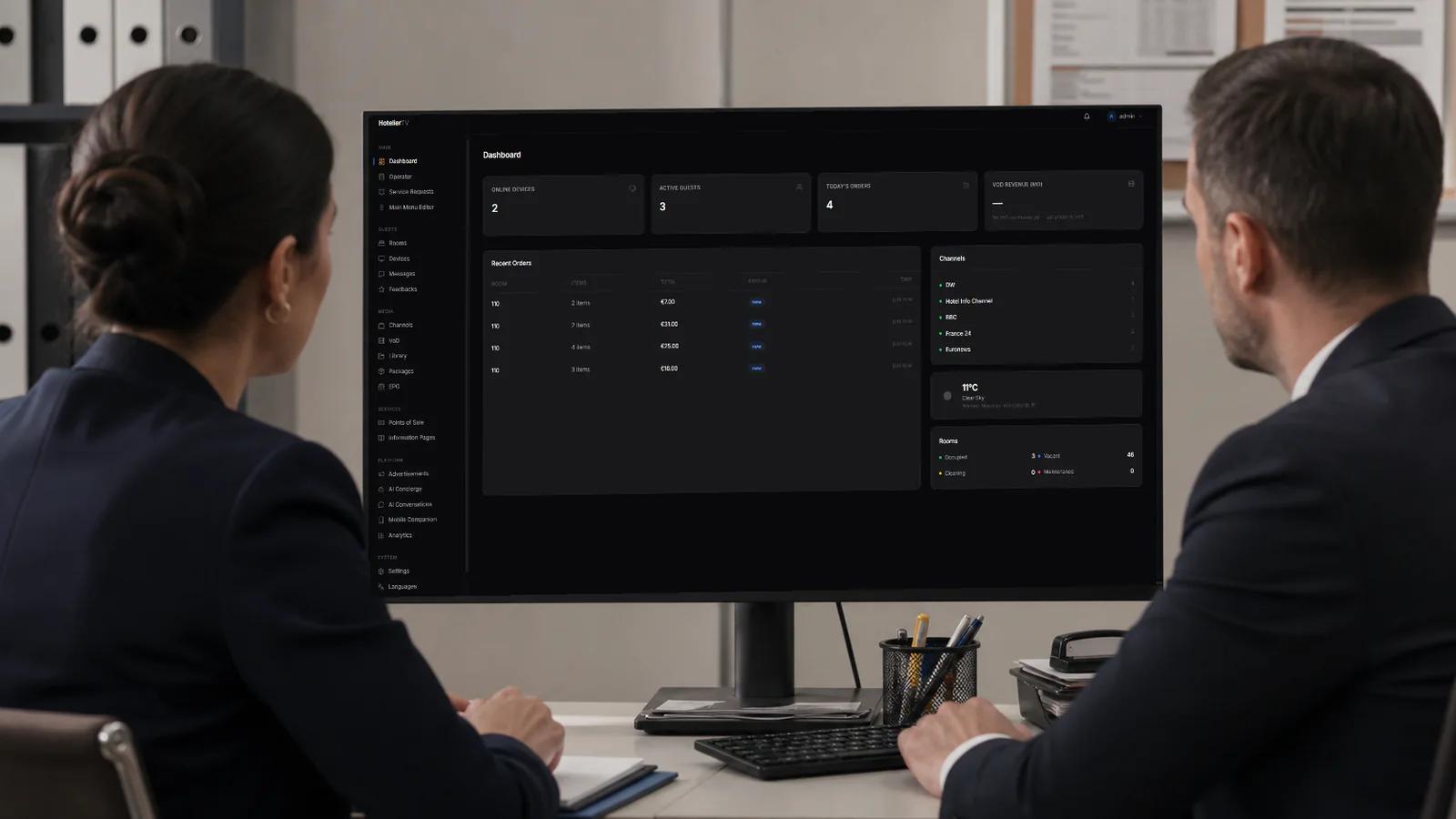
Quick Summary
Measure five layers: reach, discovery, completion, operational quality and trust. Define each metric once and compare properties only after accounting for occupancy, stay type and eligibility.
Digital hotel reporting often counts what is easiest rather than what is useful. Menu views, chatbot messages and button clicks describe activity. They do not prove that the guest received a towel, watched a channel or found the correct checkout time.
Reach
Start with active rooms, online devices, successful sessions and software coverage. Use occupied or registered rooms as the denominator where appropriate. A service cannot be evaluated in rooms where it was unavailable.
Discovery
Measure menu exposure, information-page views, channel selection, search terms and AI concierge topics. Discovery shows demand and information gaps. It does not equal revenue or completion.
Completion
For requests and offers, track confirmed task or order, not only interaction. Report conversion from eligible room to completed service, plus cancellation and failed fulfilment.
Operational quality
Time to accept, time to complete, escalation, reopen rate and repeated fault reveal whether digital demand is reaching the operation. Segment urgent technical tasks from routine requests.
Trust and privacy
Track checkout reset success, unresolved data-removal errors, guest complaints, wrong answers and staff corrections. A system with high engagement and weak privacy is not successful.
Build a metric dictionary
Every KPI needs a name, definition, denominator, owner, source, refresh frequency and exclusion rule. Decide whether a view means screen loaded, tile became visible or guest selected it. Without that precision, group comparisons become theatre.
Use context
Compare by occupancy, room count, property type, country, channel availability and stay length. A resort, airport hotel and serviced apartment should not share one unexplained benchmark.
COTT.TV analytics model
COTT.TV can report property, room, device, content and guest-service activity while applying territory and tenant boundaries. Content partners can see how their channels perform in authorised markets, and hotels can connect guest demand to operational outcomes rather than relying on anecdote.
Sources and further reading
Related Posts
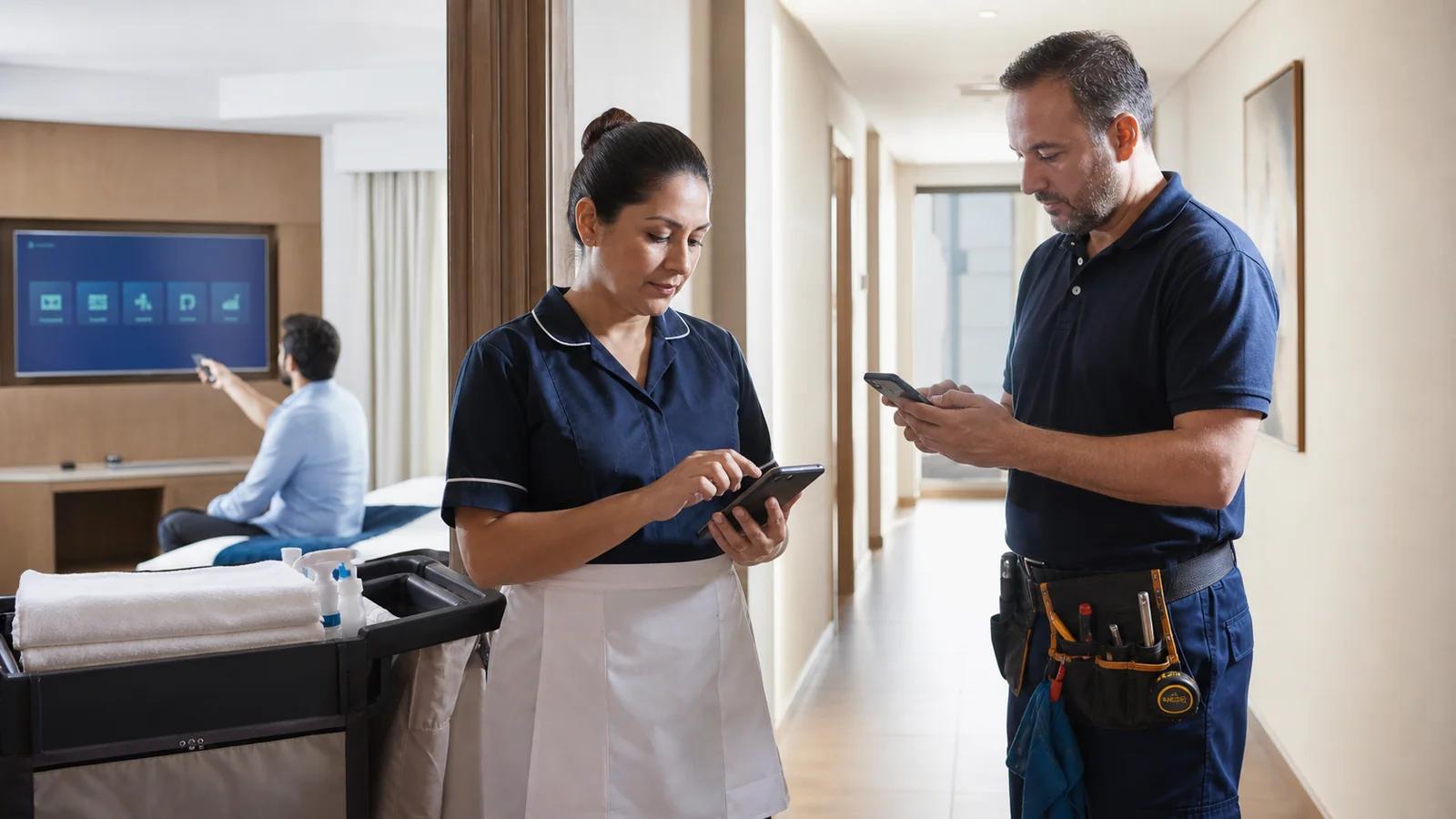
Hotel Workforce Automation: Use the Room TV to Reduce Service Friction
2026-08-17
European hotels face structural labour shortages. The right automation does not replace hospitality; it removes avoidable calls, routes guest requests and gives housekeeping and maintenance a clear work queue.
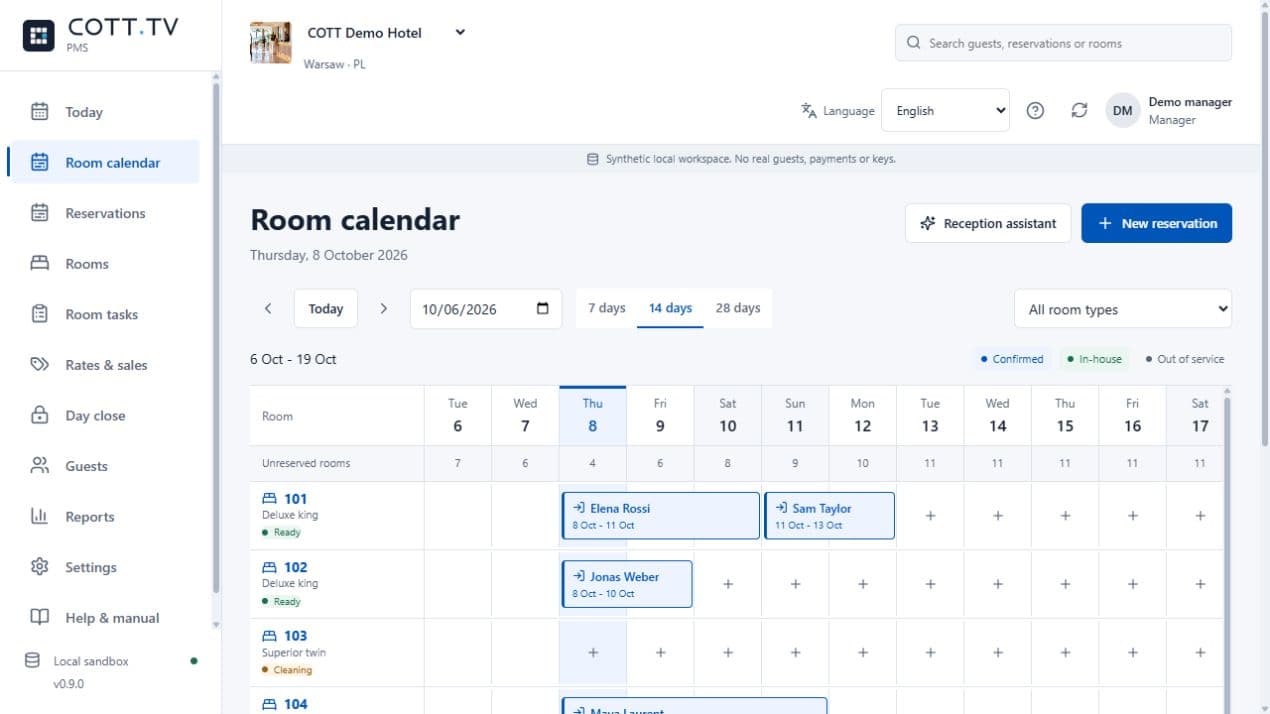
Introducing COTT DESK: Hotel PMS, Built Around the Hotel Day
2026-10-15
COTT DESK brings reservations, reception, housekeeping and guest accounts together. Applications open for a selected 90-day Founding Hotels pilot.

Hotel TV Content Analytics: What Broadcasters and Hotels Should Measure
2026-10-08
A privacy-safe reporting model for channel reach, authorised hotels, viewing time, playback quality, territory and monthly partner reports.