Multilingual Guest Communication Without App Downloads
2026-08-24
Research period: May 2026
By COTT.TV Hospitality Technology Research Desk·Published 2026-08-24·3 min read

📋 Quick Summary
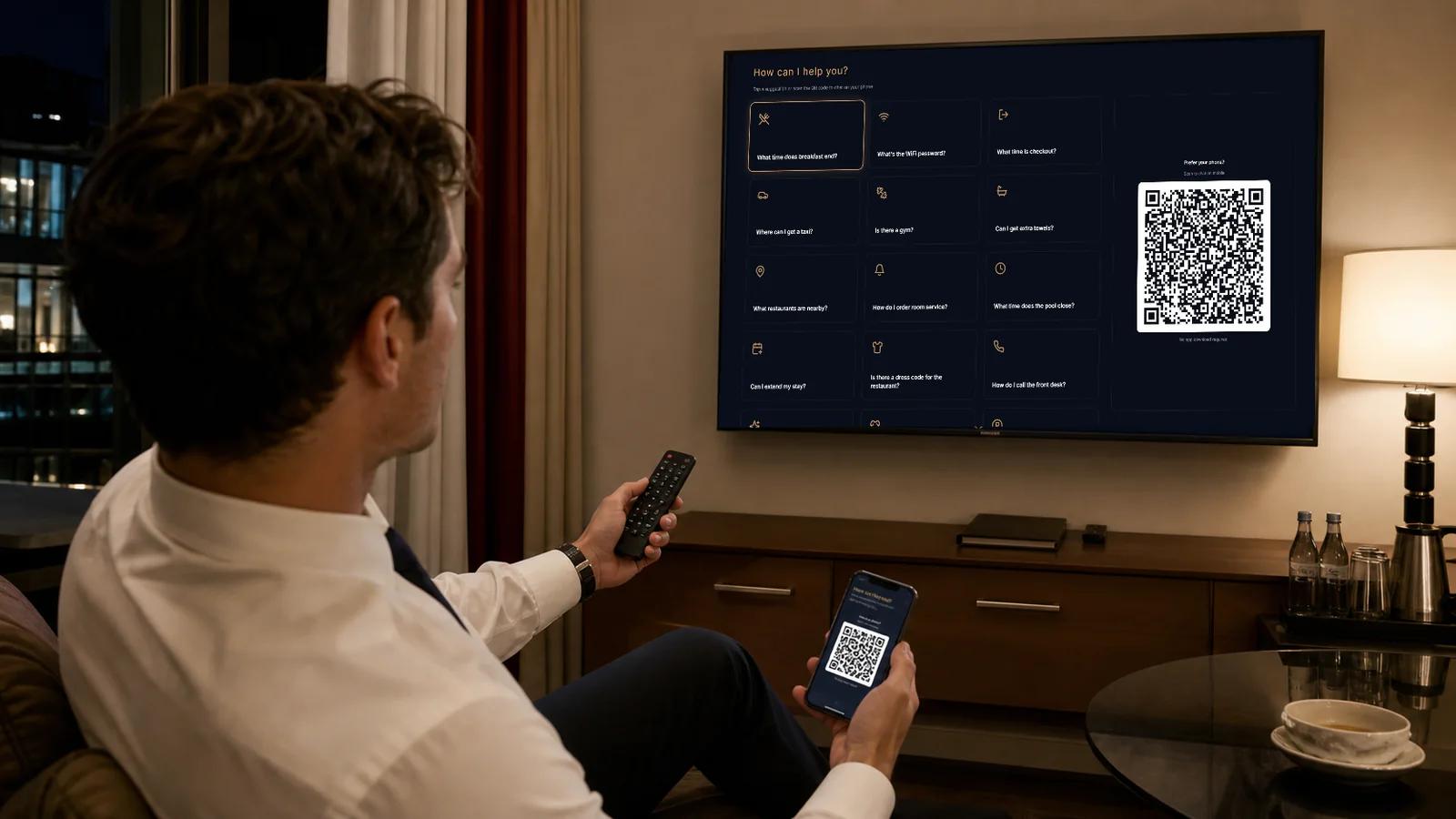
Put essential information on the room screen, let guests continue by QR in a mobile browser, remember language only for the stay and route requests into staff workflows. Keep the app optional.
A hotel app can be valuable for a loyal guest. It is a weak default for someone staying one night, using limited mobile data or unwilling to create another account. The better design starts from reach: the room television is already present, while a QR code can continue the same experience on the guest's browser without an installation.
Start with the questions guests actually ask
Breakfast, Wi-Fi, checkout, transport, parking, restaurant hours, extra towels and local directions form the core knowledge set. Translate approved answers, not isolated marketing pages. Times, prices, allergens and emergency wording require human review.
Language detection should never trap the guest. Show a visible language control and allow immediate correction. The chosen language may follow the room session, but it should be removed with other stay-specific state at checkout.
Design a channel ladder
Television: best for discovery, hotel information, live content and shared viewing.
QR to web: best for typing, private conversation and continuing away from the room screen.
Staff handoff: essential for complaints, accessibility, safety and requests that require judgement.
Native app: useful for loyalty, digital key and repeat-stay functions, but should not be the only route to basic service.
Oracle's hospitality research found strong interest in mobile self-service, while earlier industry research also identified difficulty promoting guest-facing apps. These findings are compatible: guests value control, but not every useful interaction requires an installation.
Govern the answers
Each property fact needs an owner and review date. Central teams can approve brand and legal content, while properties maintain local hours, menus and transport information. The assistant should use this controlled knowledge base and admit uncertainty instead of inventing an answer.
Measure unanswered questions and corrections by language. A high volume of "What time is breakfast?" is not merely an AI metric; it may show that the information is poorly placed elsewhere.
Accessibility and tone
Use plain language, readable contrast, logical focus order and alternatives to icons. Avoid flags as the only representation of language. Test screen-reader and keyboard navigation on the mobile web route. Translation must preserve meaning rather than mimic English sentence structure.
Privacy by default
Most information questions do not need identity. Do not ask for name, email or reservation number before answering a public property fact. When a room-specific action is required, use the smallest reliable context and explain the purpose.
COTT.TV approach
COTT.TV combines the room interface with an AI concierge and QR continuation that requires no app download. Hotels manage approved property information centrally, and uncertain or operational requests can be routed to staff. The objective is not to replace hospitality; it is to remove the search effort before a person is needed.
Sources and further reading
Related Posts
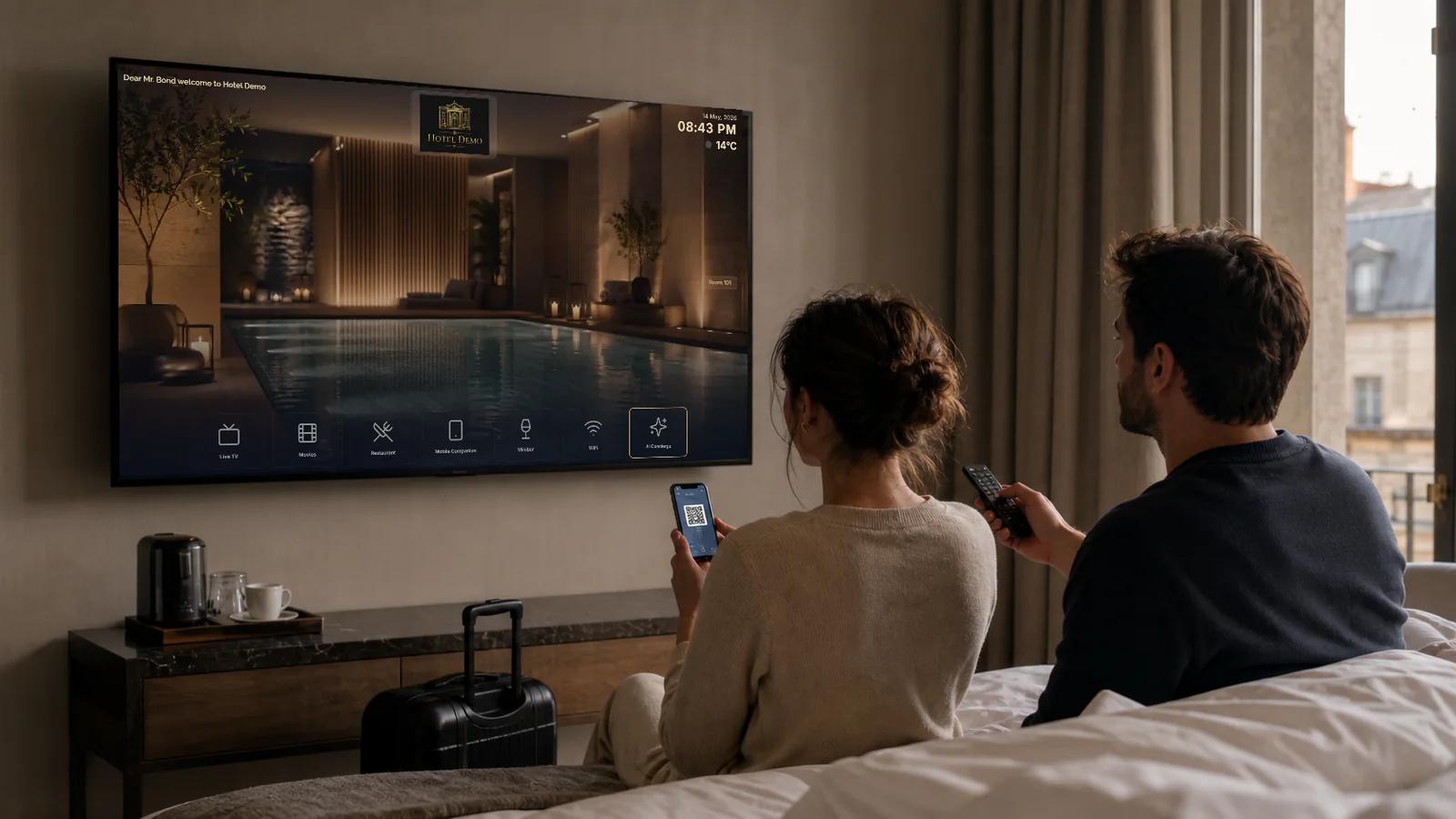
The Zero-Download Guest Journey: TV, QR, Web or Mobile App?
2026-08-28
A decision framework for assigning each hotel interaction to the room television, QR web experience or native app without forcing one channel onto every guest.
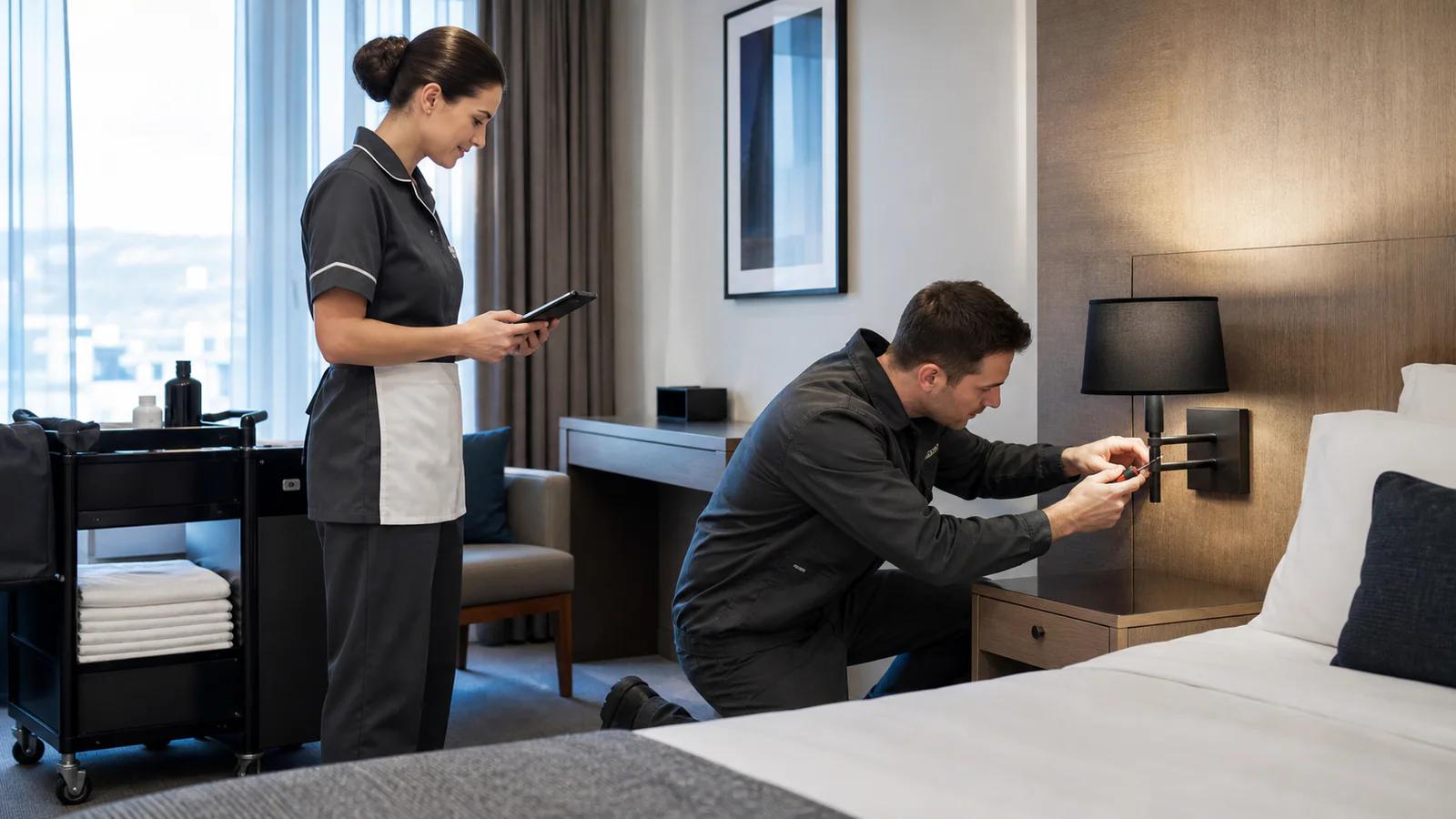
Housekeeping and Maintenance Requests: Designing a Closed-Loop Workflow
2026-09-01
A practical workflow for turning guest and staff requests into accepted, timed and verified tasks instead of messages that disappear between departments.
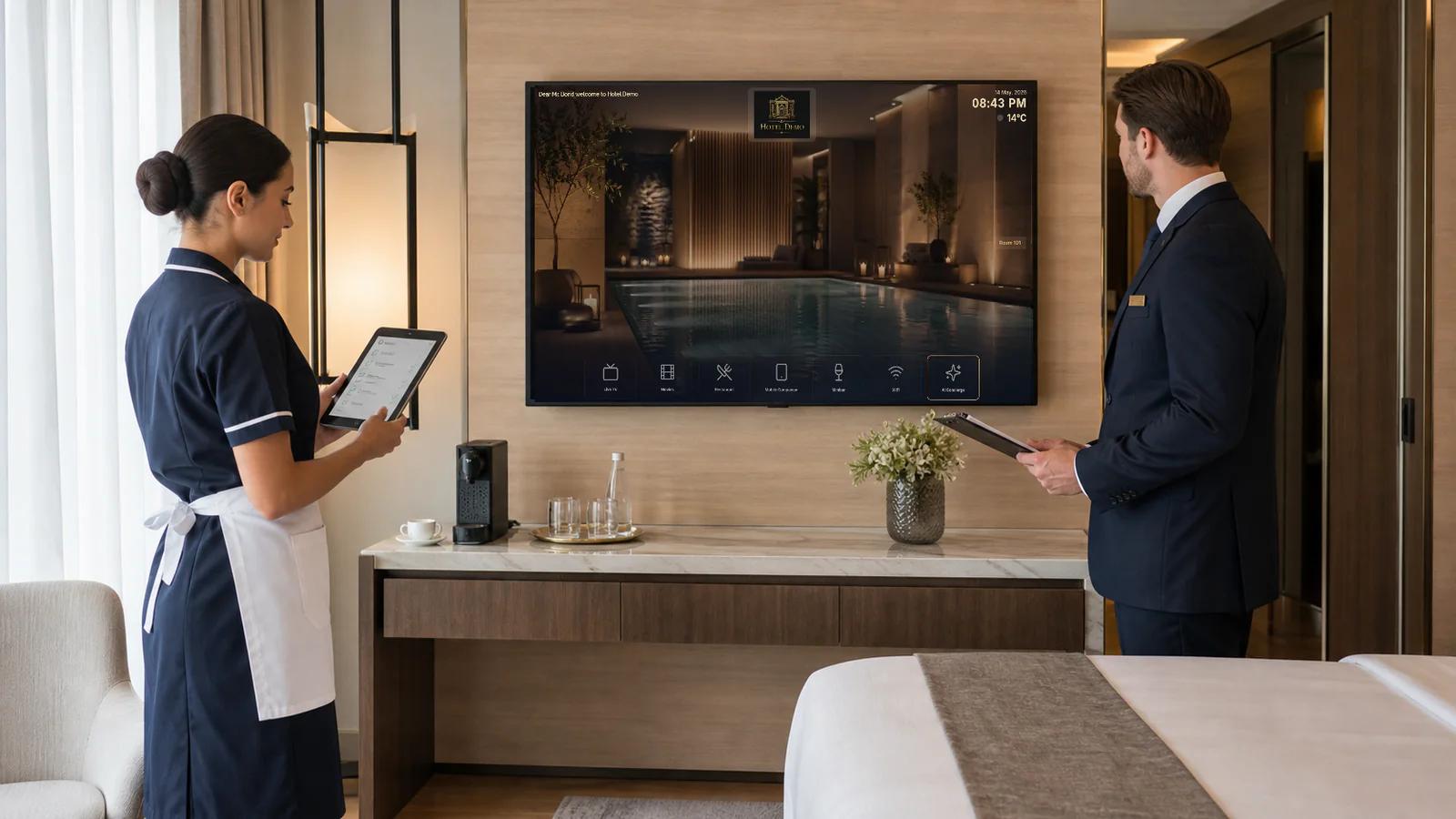
PMS Checkout Data Hygiene: What Must Be Wiped From the Room
2026-08-30
A room-by-room data reset model for guest names, OTT credentials, casting sessions, messages, orders and stay tokens after checkout or room move.