PMS Checkout Data Hygiene: What Must Be Wiped From the Room
August 30, 2026
Research period: June 2026
By COTT.TV Hospitality Technology Research Desk·Published August 30, 2026·2 min read

Quick Summary
Separate persistent room identity from temporary stay identity. On checkout, revoke stay tokens, clear personalisation, disconnect casting, sign out supported OTT sessions, remove messages and return the screen to a clean property landing page.
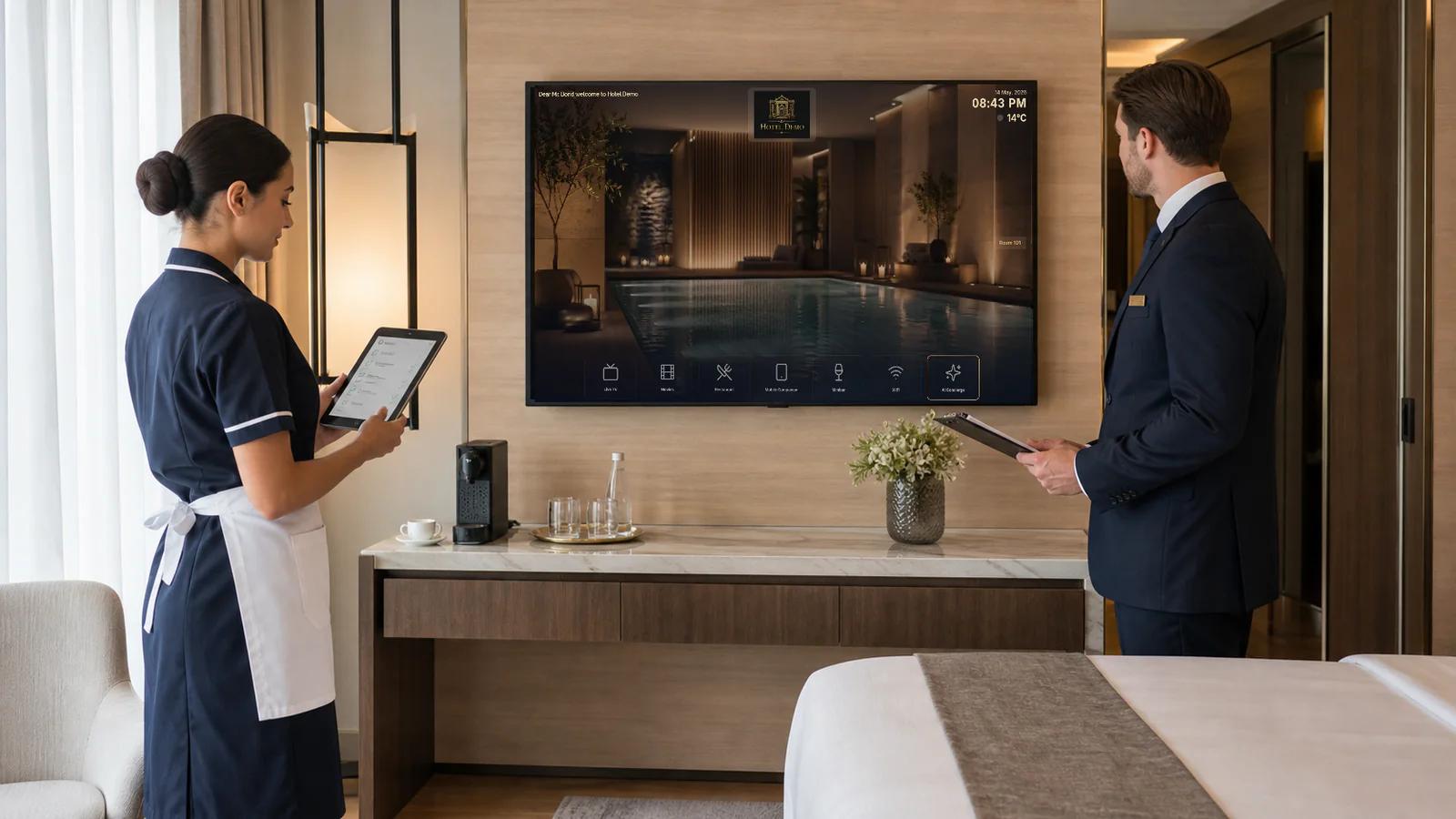
A checkout is both an operational event and a privacy boundary. The previous guest's name, messages, orders, casting session and OTT credentials must not become part of the next guest's room experience. The reset must also work after a room move, early departure or PMS correction.
Separate room state from guest state
The television's room pairing must survive reboot and checkout. The stay token must not. Store persistent device identity independently from guest context so the system can wipe one without forcing engineers to register every room again.
The reset inventory
- 1guest name, language and welcome message;
- 2reservation and stay dates shown in the room;
- 3private messages and request history visible to the guest;
- 4QR or mobile companion session;
- 5casting relationship and device tokens;
- 6supported OTT credentials or application checkout state;
- 7food order cart and recent guest-facing orders;
- 8temporary accessibility or preference settings;
- 9cached personal content and playback state.
Operational records may need to remain in secured back-office systems for accounting, incident or service analysis. They should no longer be available from the room endpoint.
Trigger design
Use the PMS checkout event as the primary trigger and add a manual reset control for reception. Make reset idempotent: sending it twice should produce the same clean result. Queue the event if the television is offline and apply it when the device reconnects.
Cloudbeds, Mews and Oracle integrations expose reservation or event interfaces, but hotels must map the exact event and room assignment used by their deployment. A generic "PMS connected" statement does not prove checkout hygiene.
Test the difficult cases
Test normal checkout, room move, no-show cancellation, back-to-back room assignment, offline TV, PMS outage and a guest who signed into an OTT application. Confirm both the screen state and server-side session revocation.
The European Commission describes data minimisation and storage limitation as core GDPR principles. The practical room test is whether personal data remains available longer than the stay purpose requires.
Evidence and monitoring
Log reset request, source event, room, device, result and time without reproducing unnecessary guest data. Alert on repeated failure or a reset that remains pending beyond the property's turnaround threshold.
COTT.TV reset model
COTT.TV keeps room and device identity persistent while treating guest personalisation as stay-scoped. PMS checkout can return the interface to a clean landing page and trigger supported credential-clearing workflows. The exact capability is validated against the television model, application profile and PMS interface before rollout.
Sources and further reading
Related Posts
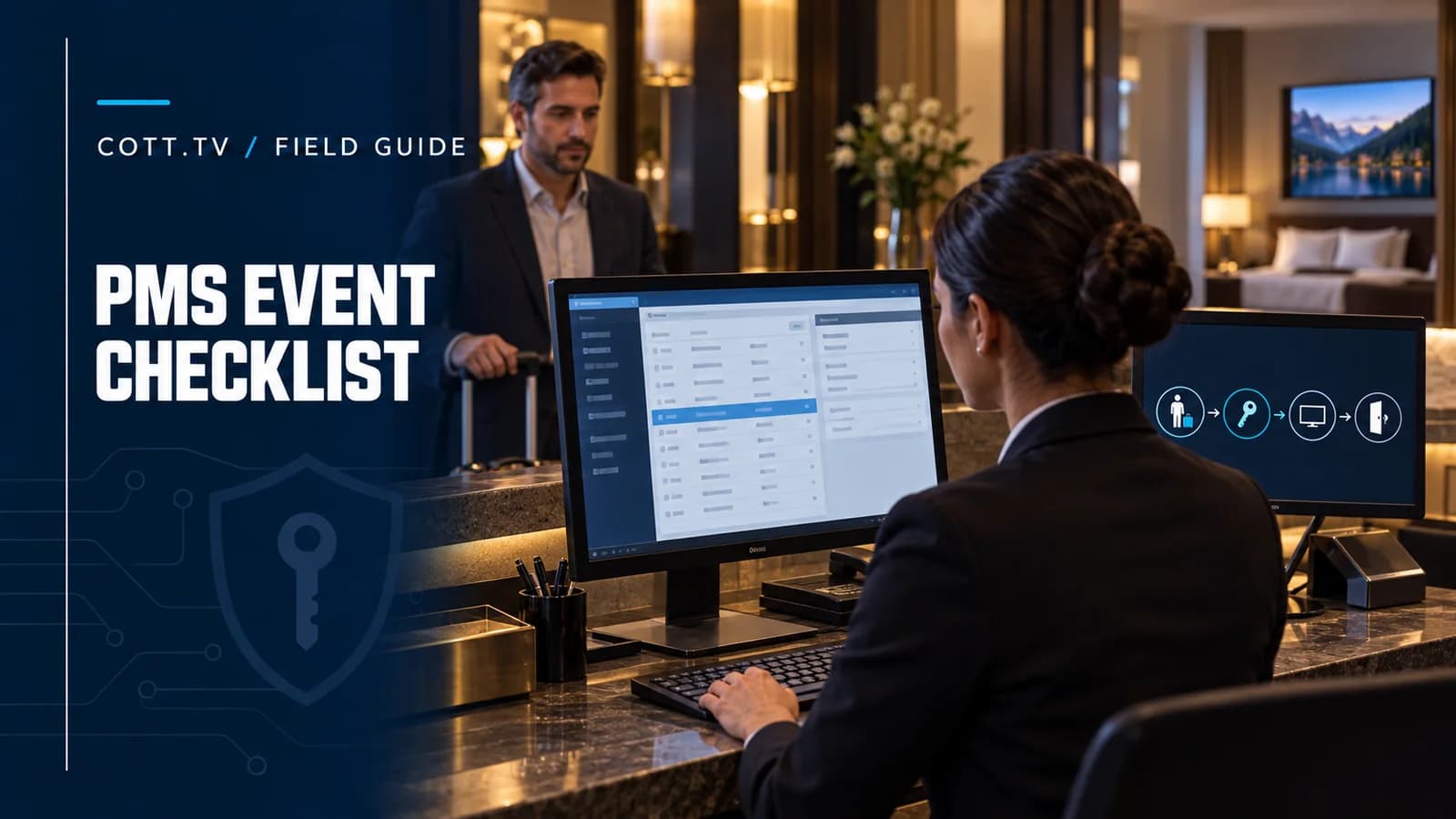
Hotel PMS Events for TV Systems: Check-In, Room Move and Checkout Done Properly
2026-10-02
An event-driven integration pattern with idempotency, reconciliation, privacy controls and failure recovery for hotel room technology.
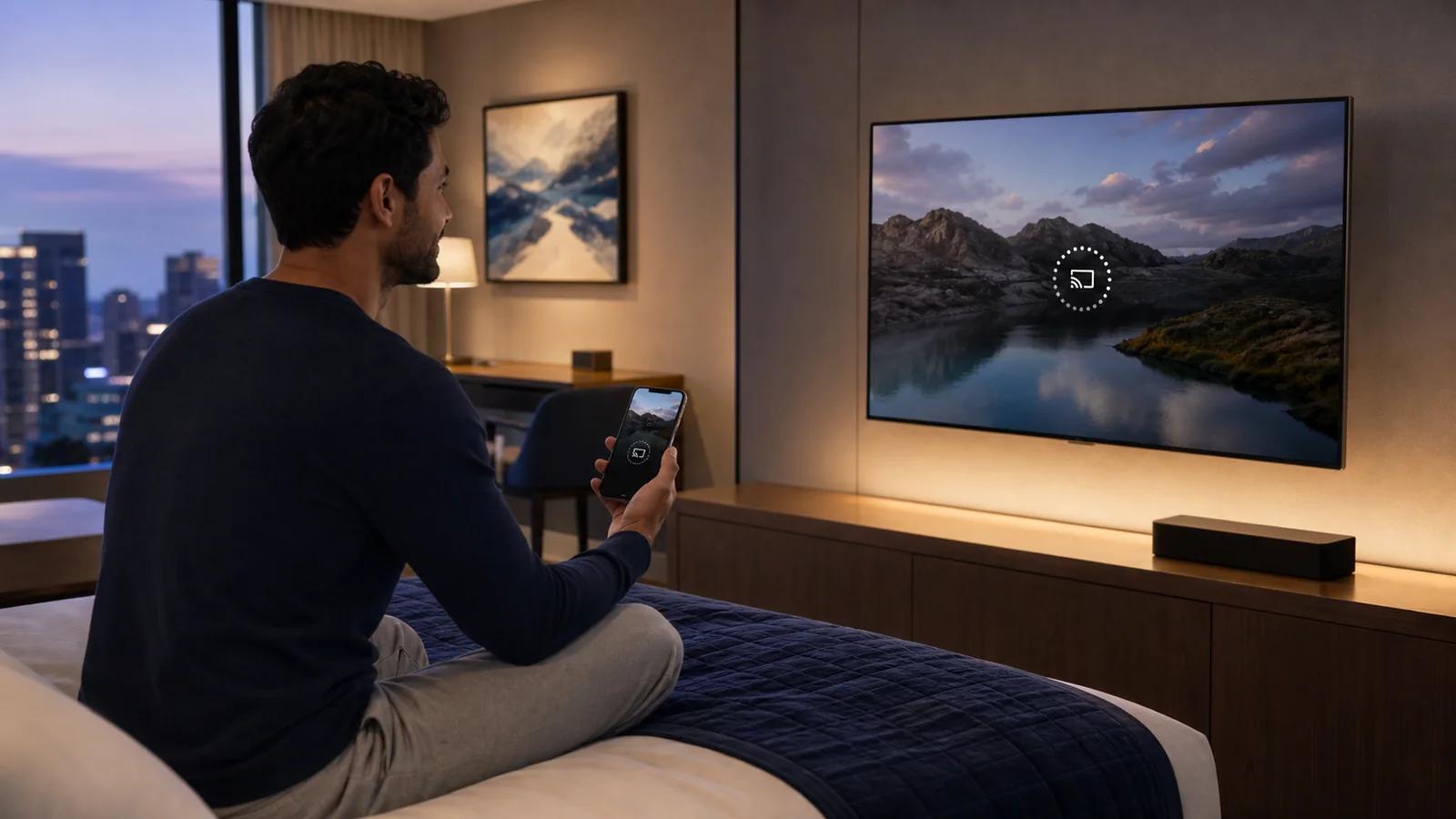
Secure Hotel Room Casting: AirPlay, Google Cast and Guest Privacy
2026-08-17
Hotel casting is convenient only when pairing is room-specific, guest credentials never remain on the television, and checkout reliably destroys the session. This guide explains what to specify and test.

Secure Hotel Casting in 2027: AirPlay, Google Cast and Checkout Privacy
2026-09-22
A technical and operational guide to room-specific pairing, network isolation, checkout reset and acceptance testing for hotel casting.