Hotel TV Five-Year TCO: Cloud, STB and On-Premise Cost Model
September 7, 2026
Research period: July 2026
By COTT.TV Hospitality Technology Research Desk·Published September 7, 2026·2 min read


Quick Summary
Build the model per registered room and per property, separate one-time and recurring cost, add internal labour and a risk reserve, then compare the same service scope across cloud, STB, direct-TV and on-premise options.
The first-year licence is rarely the largest source of error in a hotel television business case. Buyers omit endpoints, receiver cards, content rights, internet, support, staff time and replacement. A five-year model makes different architectures comparable.
Cost categories
Initial: design, installation, server, receiver cards, CAMs, televisions or STBs, remotes, cabling, PMS integration, branding and training.
Recurring: software, room licence, content, CDN or bandwidth, support, certificates, monitoring and third-party interfaces.
Lifecycle: hardware replacement, spares, firmware work, security remediation, site visits and migration at contract end.
Internal: procurement, content administration, helpdesk, engineering and finance reconciliation.
Normalise the comparison
Use the same room count, channel package, PMS scope, support hours, availability target and tax basis. Calculate annual cost per registered room and five-year net cash cost. Do not compare a cloud quote that includes support with a local server quote that excludes year-two maintenance.
Direct TV versus STB
A validated hospitality television may remove the STB, power supply, HDMI cable and mounting work. If existing screens are retained, a preconfigured STB may preserve capital and standardise the interface. Include device failure rate and room visit cost in both cases.
Cloud versus on-premise
Cloud usually reduces local hardware and accelerates launch. On-premise may suit large properties with local satellite or terrestrial reception and can reduce WAN dependency. Hybrid can preserve local channels while centralising services. Price the operating model, not the label.
Add scenarios
Model base, growth and stress cases. Change rooms, content package, internet, hardware replacement and support. The purpose is not false precision; it is to show which assumptions change the decision.
COTT.TV planning baseline
COTT.TV cloud pricing starts from EUR 10 per registered room per month, with compatible hospitality-TV deployment or preconfigured STB routes. On-premise and hybrid projects are quoted against room count, receiver configuration, PMS and support. The final model should use the property's exact television fleet and rights schedule.
Sources and further reading
Related Posts
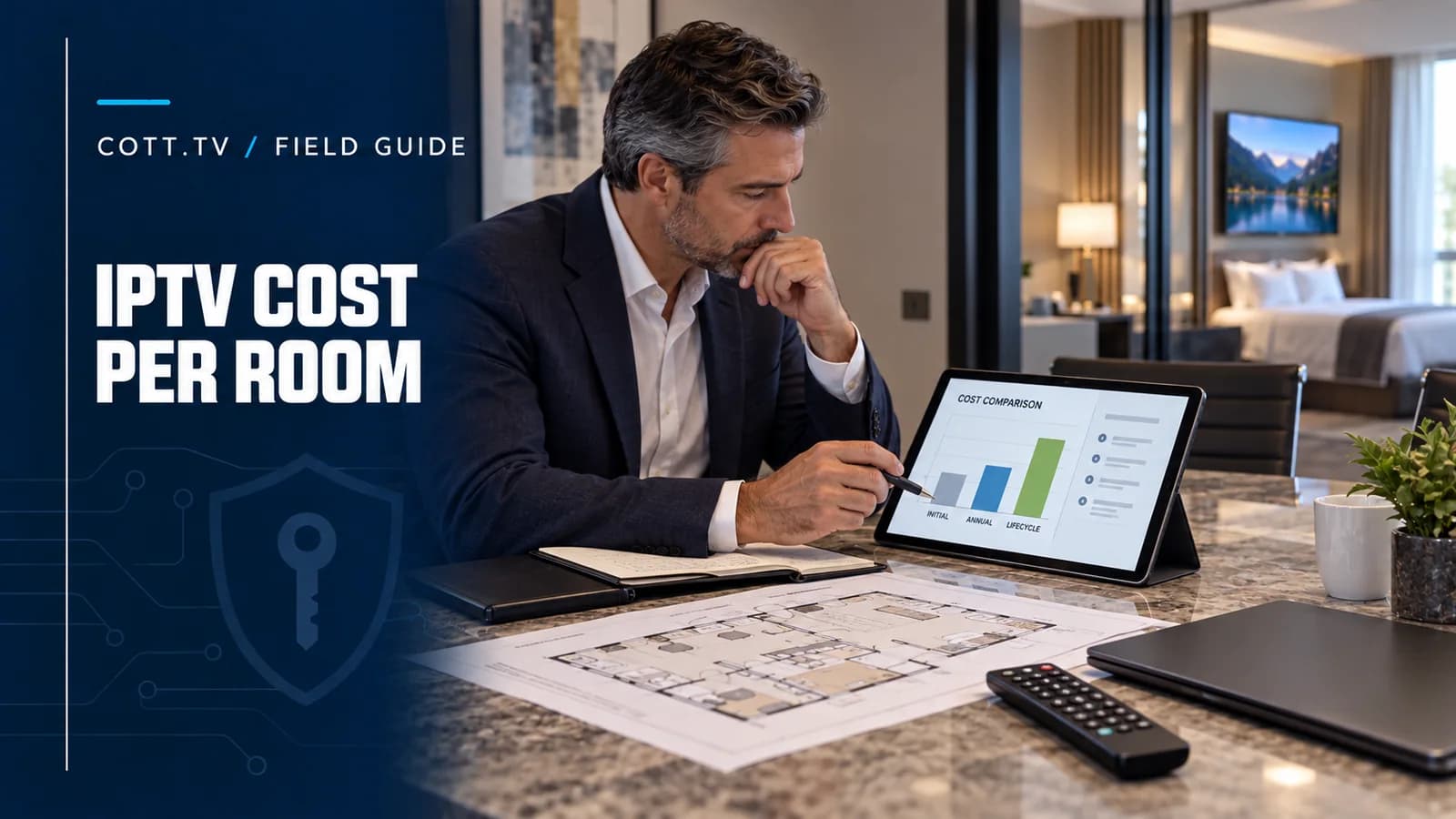
Hotel IPTV Cost per Room in 2027: A Transparent Calculation Method
2026-10-04
A practical cost-per-room model covering software, televisions, STBs, content, networks, integration, support and lifecycle replacement.
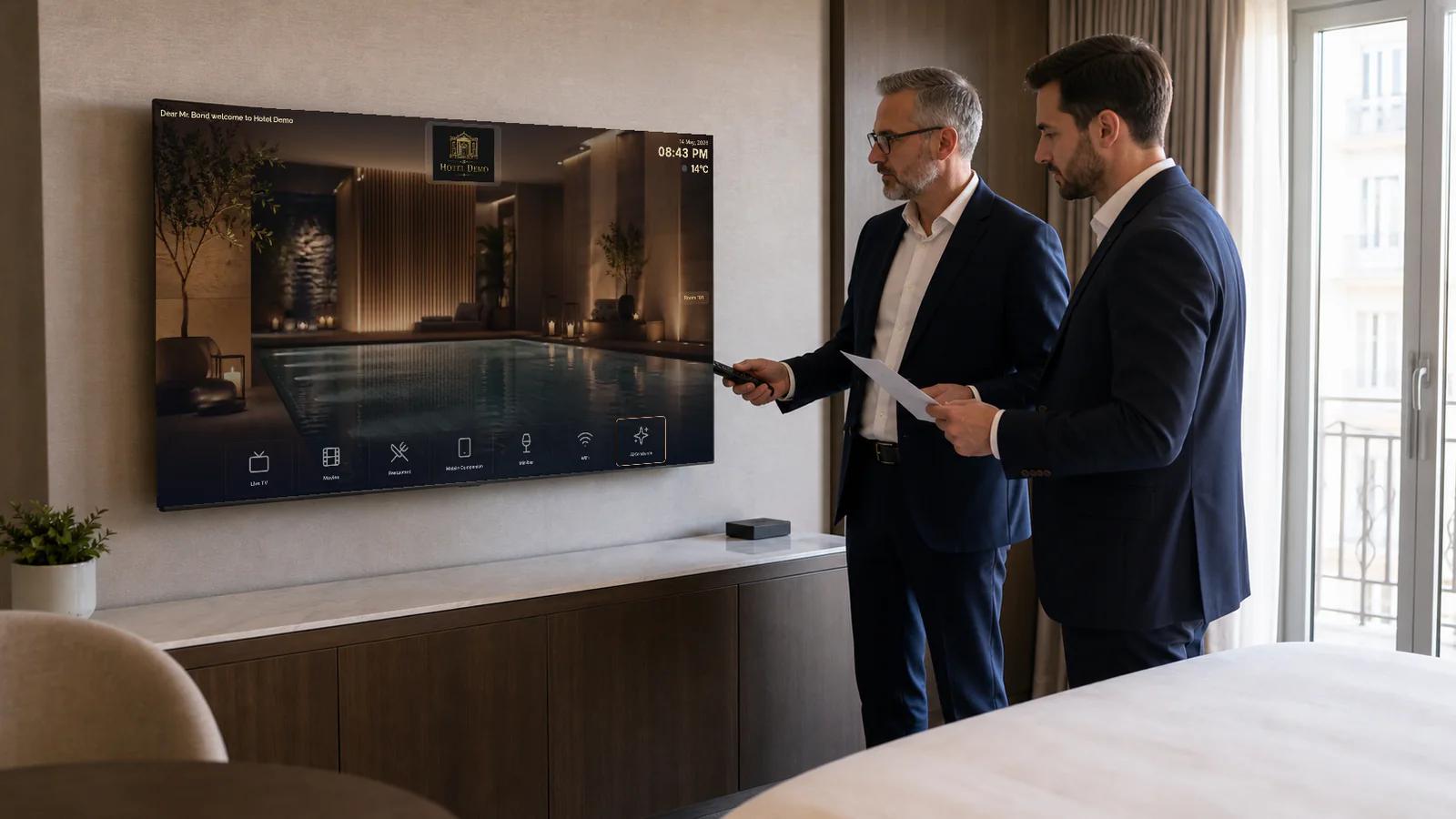
Hotel TV Tender Specification: 24 Questions Before Ordering Screens
2026-08-22
The procurement questions that separate a supported hospitality-TV deployment from a cheap screen purchase that creates years of operational cost.
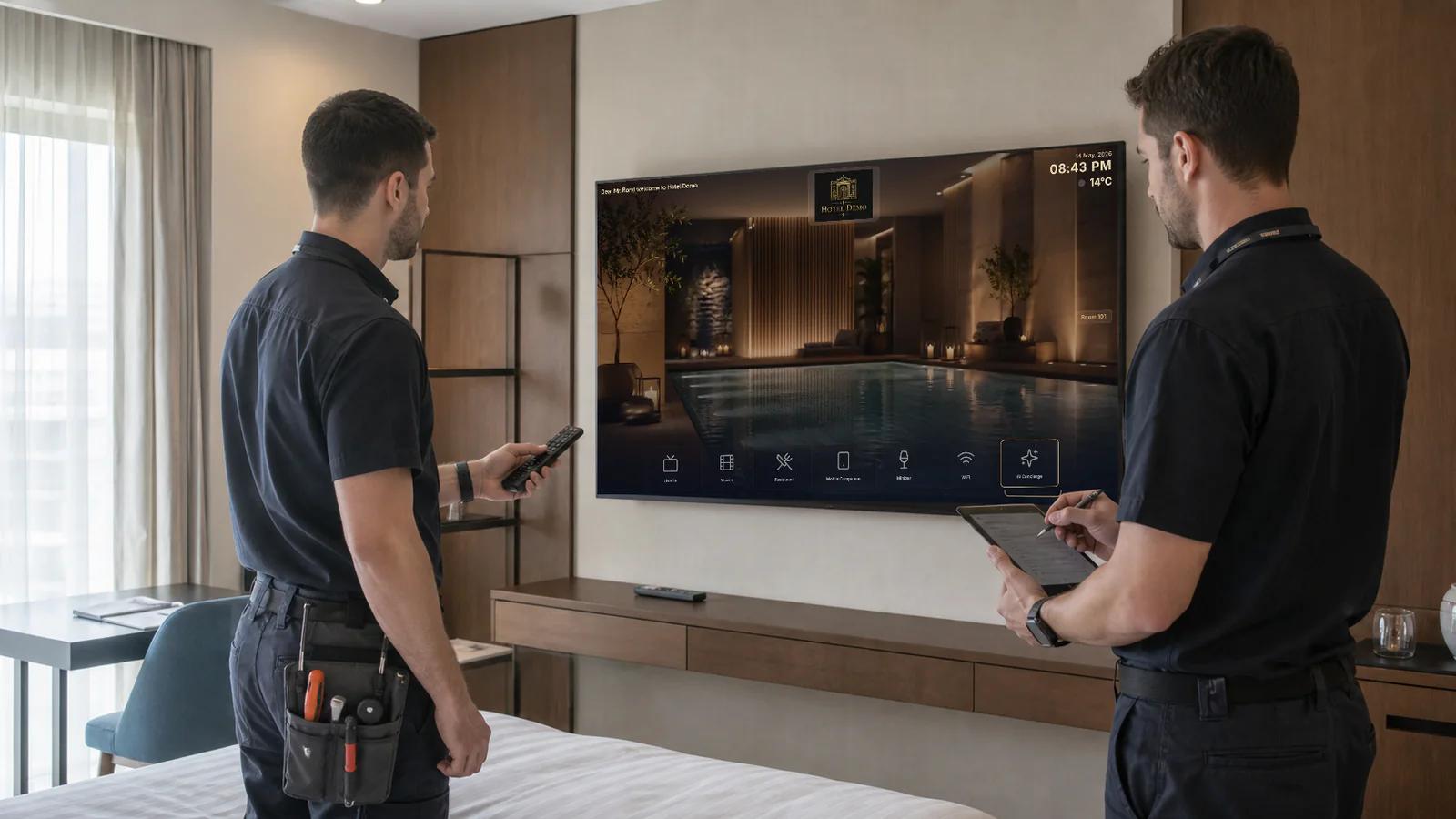
How to Audit 100 Guest-Room TVs in One Morning
2026-08-20
A repeatable room sampling, device identification and acceptance workflow that produces actionable evidence without disrupting the property.