Hotel Technology Budget 2027: A Practical Planning Framework for…
September 15, 2026
Research period: July 2026
By COTT.TV Hospitality Technology Research Desk·Published September 15, 2026·2 min read

Quick Summary
Divide 2027 spend into protect, operate, grow and explore. Fund lifecycle and security first, require measurable operating outcomes for the next layer, and gate experiments through short pilots.
A useful hotel technology budget does not begin with vendor categories. It begins with business risks and operating outcomes. Owners need to see what is mandatory, what reduces cost, what improves the stay and what remains an experiment.
1. Protect
Fund security updates, unsupported hardware replacement, backups, network segmentation, access review, privacy controls and regulatory work. Booking.com's 2026 Accommodation Barometer found a wide cybersecurity-readiness gap between large and very small operators. Deferred protection becomes unplanned operational cost.
2. Operate
Prioritise changes that remove repeated manual work or prevent service failure: room device visibility, PMS checkout reset, staff task routing, central content management and reliable support. Build the business case from labour minutes, incidents and room downtime.
3. Grow
Invest in direct guest-service revenue, better content, multilingual information, verified local recommendations and measurable in-stay offers. Growth projects need fulfilment capacity and net contribution, not only engagement.
4. Explore
Reserve a controlled amount for AI concierge, new VOD models, advanced advertising, voice or other emerging capabilities. Use a time-boxed pilot and a named decision. Do not scale because a demonstration looked impressive.
Portfolio questions
- 1Is the project required, operational, commercial or experimental?
- 2Which properties and rooms are eligible?
- 3What dependency must be completed first?
- 4Who owns the result after implementation?
- 5What is the five-year cost and exit path?
- 6Which metric changes if the project succeeds?
- 7What happens if the project is delayed one year?
Plan by property archetype
Standardise the management layer but recognise different needs. A small independent hotel may gain most from cloud simplicity and direct-TV deployment. A large resort may need local reception and hybrid resilience. A group needs portfolio governance and country rights.
Sequence the year
Use Q1 for inventory and mandatory remediation, Q2 for pilots before high season, Q3 for controlled rollout or content preparation and Q4 for review and the next budget. Tourism remains strong: Eurostat recorded more than 3.09 billion EU accommodation nights in 2025 and continued growth in Q1 2026. Technology planning should assume sustained operating pressure.
COTT.TV budget routes
COTT.TV supports cloud, on-premise and hybrid hotel television with direct deployment on validated hospitality screens or preconfigured STBs. The platform combines guest TV, services, AI concierge, content marketplace and emerging staff workflows, reducing the need to buy unrelated modules from multiple vendors.
Sources and further reading
Related Posts

Secure Hotel Casting in 2027: AirPlay, Google Cast and Checkout Privacy
2026-09-22
A technical and operational guide to room-specific pairing, network isolation, checkout reset and acceptance testing for hotel casting.
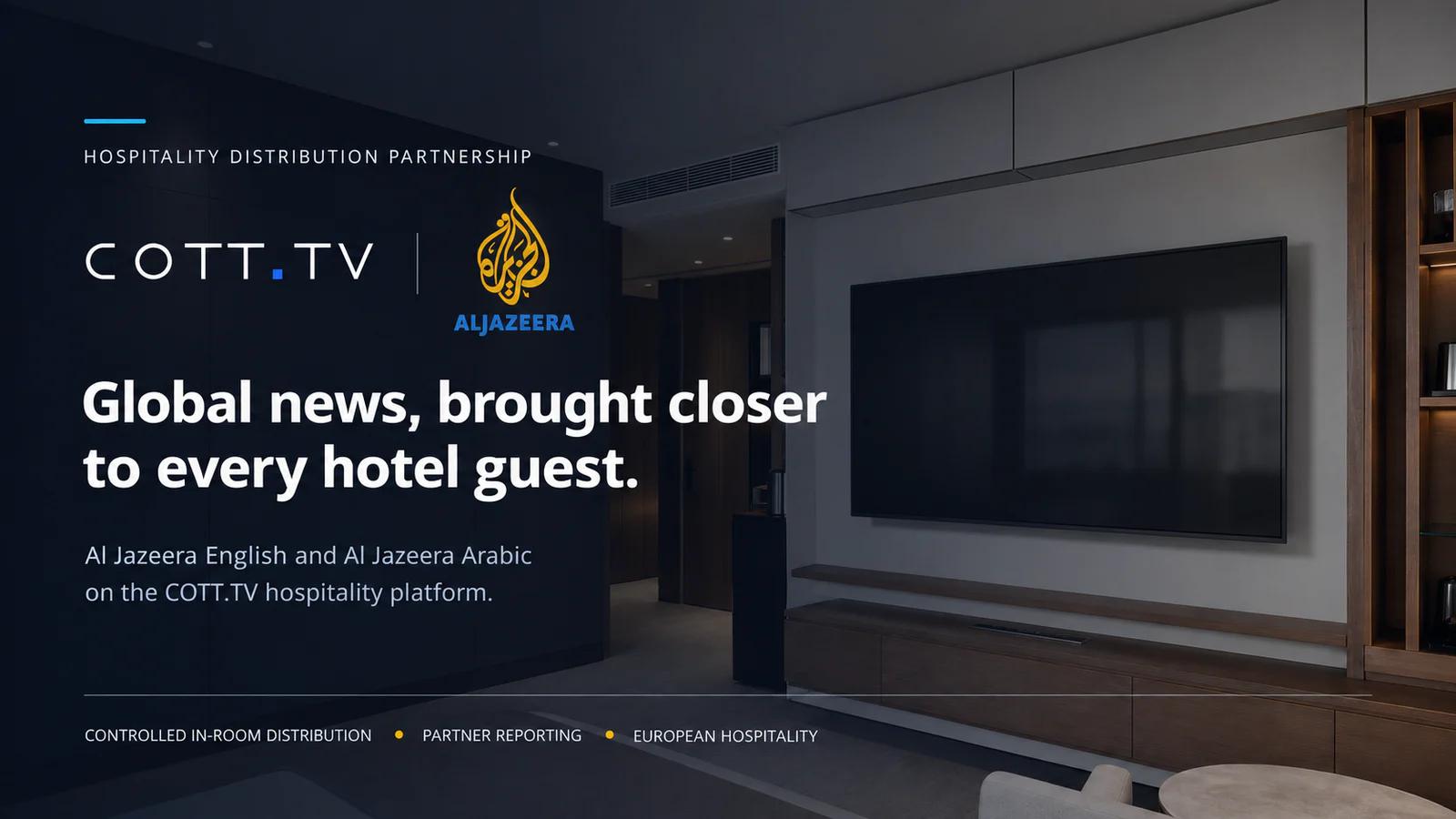
COTT.TV and Al Jazeera Partner for Hospitality Distribution
2026-09-16
COTT.TV and Al Jazeera Media Network have signed an agreement to bring Al Jazeera English and Arabic to hotel guests across approved hospitality markets.

Hotel Technology Vendor Lock-In: Exit, Data and Device Portability Checklist
2026-09-13
The contractual and technical exit questions hotels should answer before placing property data, room devices and operational workflows inside a platform.